The resistance fighters of the Tabakfabrik Linz
02. February 2026
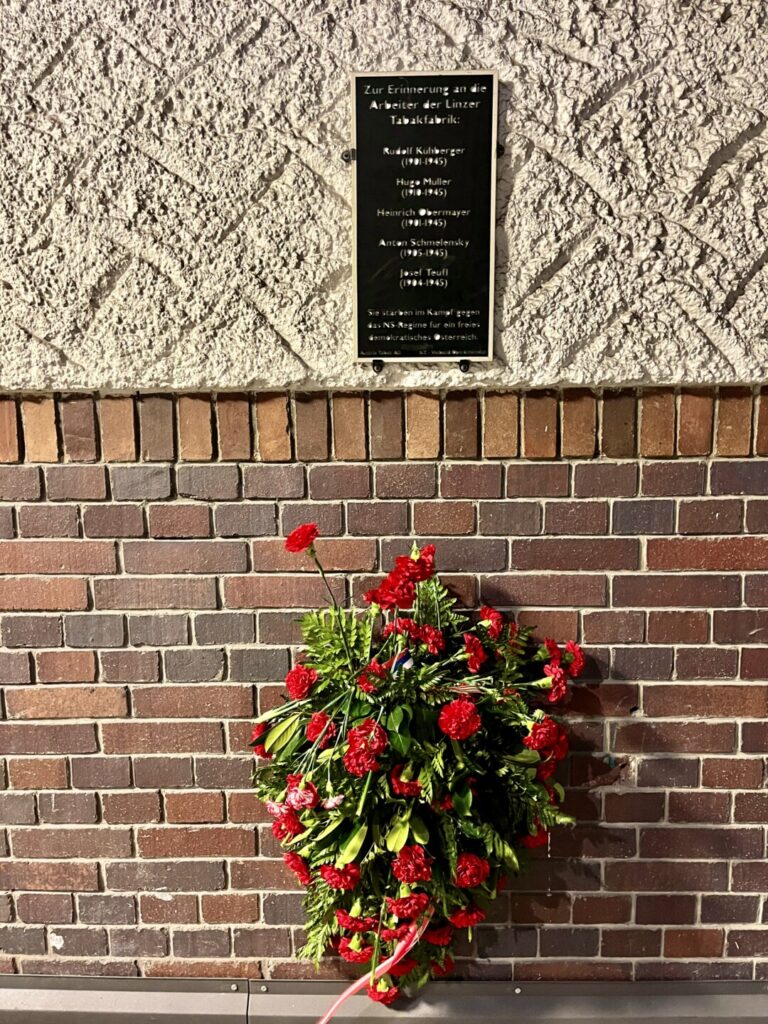
Rudolf Kühberger, Hugo Müller, Heinrich Obermayr, Anton Schmelensky and Josef Teufl – these five workers and employees of the Tabakfabrik Linz were communist anti-fascists and were murdered by the National Socialists or fell in the fight against them.
Harald Grünn, Chairman of the Upper Austrian Concentration Camp Association
in an interview with Tabakfabrik Linz 2019
Sepp Teufl: Worker and resistance fighter
A short biography of Sepp Teufl can be found on the website of the contemporary history project insitu. It also reveals the tragic intertwining of his own life with that of his murderer: Josef Teufl was born in Vienna in 1904 and trained as a locksmith at the Krauss locomotive factory in Linz. In the 1920s, he became a member of the Communist Party of Austria (KPÖ) and, after it was banned in 1933, became the illegal regional chairman of Upper Austria. After the battles in February 1934, in which Teufl took part, he was arrested and shared a cell with the National Socialist August Eigruber. Harald Grünn explained: “The connection was that Teufl and Eigruber were imprisoned together under Austrofascism, one as a communist, the other as a Nazi. So there were certain contacts, they knew each other. But of course Eigruber kept the murder machine going right to the end. So the Nazis really did try to work through the death lists when the end was within reach.”
After the annexation of Austria by the Nazis, Teufl set up a widespread communist resistance group based in the Linz Tabakfabrik. He acted in the background as he was aware that the Gestapo were aware of his political views. In 1943, Eigruber, now Gauleiter of Upper Danube, tried to persuade Teufl to take on a party function in the NSDAP, but he refused.
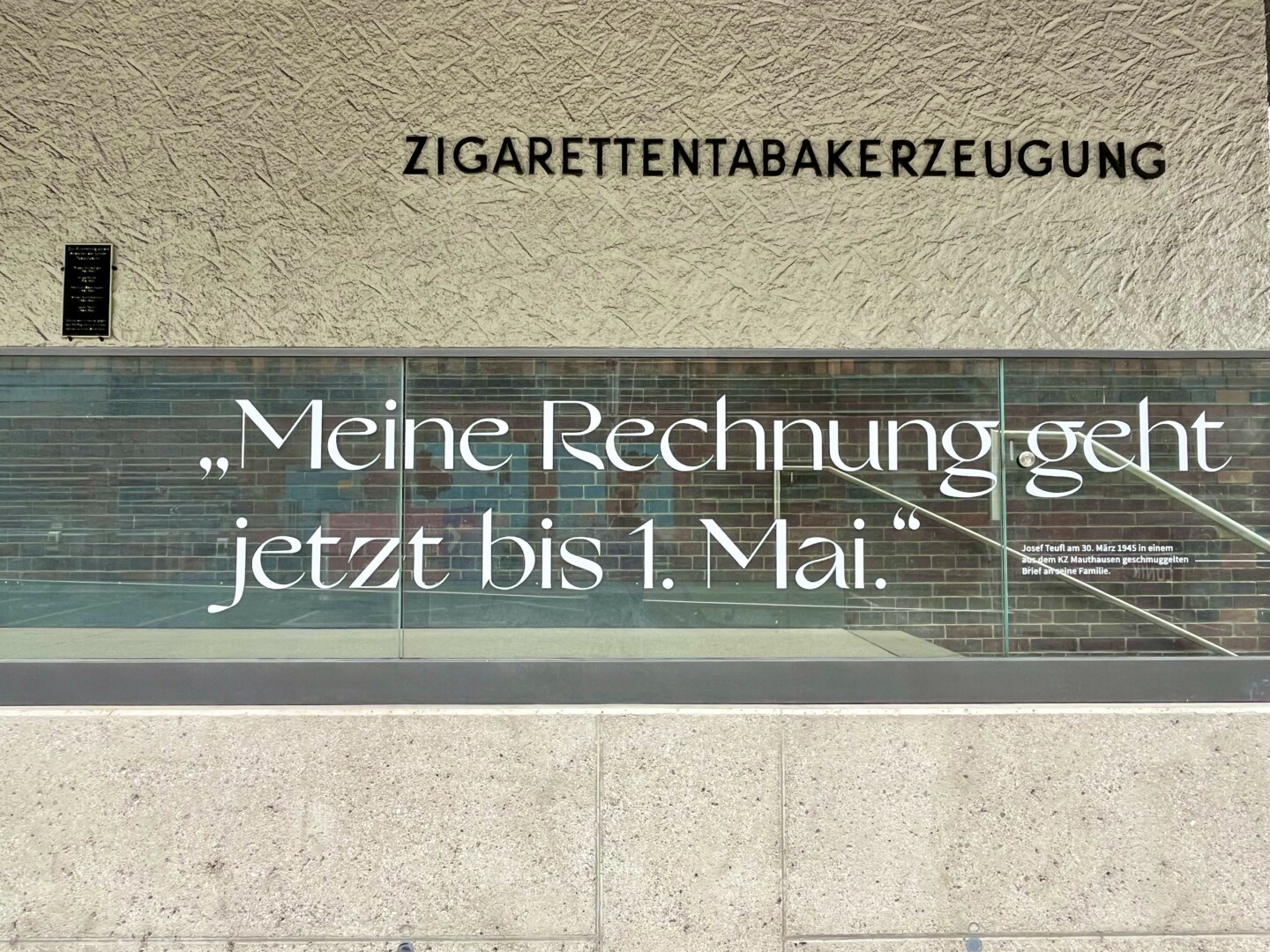
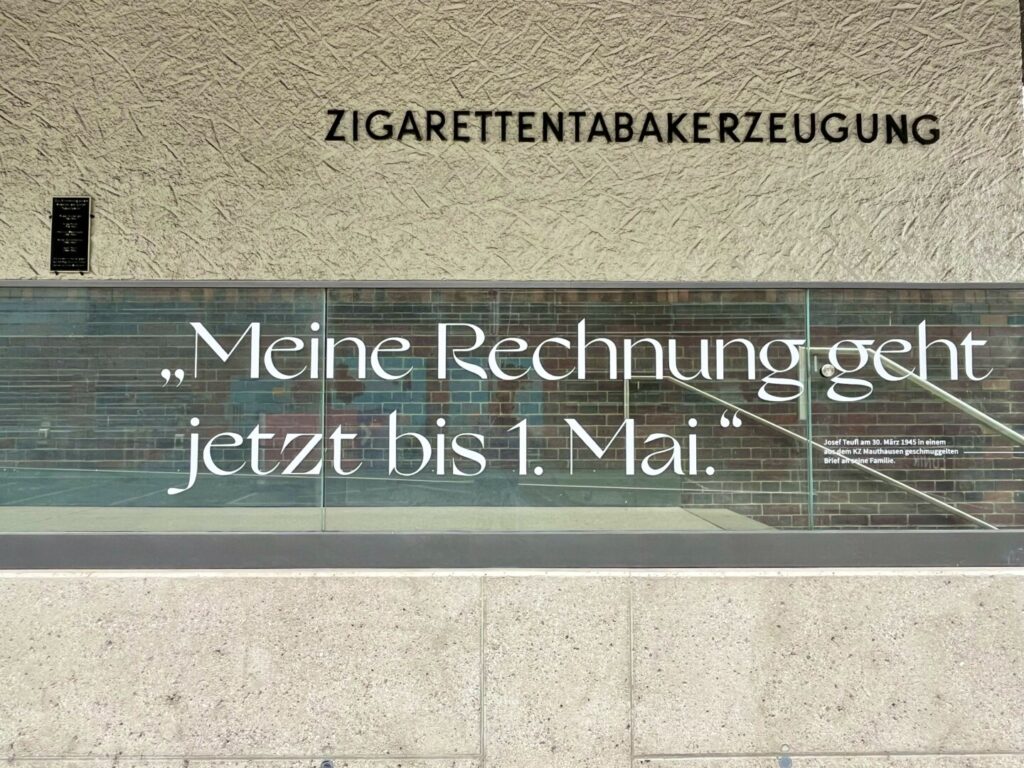
“I now count until May 1”
“We are all under extreme tension here and everyone is already painting the near future in the most rosy colors. I now count until May 1,” wrote Josef Teufl in an illegal letter smuggled out of the Mauthausen concentration camp to his family on March 30, 1945. He was killed in the night of April 28-29, 1945, together with 41 other anti-fascists in the last gassing operation at Mauthausen.
Tabakfabrik Linz / Chris Sennlaub
“It was possible to smuggle certain messages out of the Mauthausen concentration camp with the help of the camp resistance, for example via the laundry. Of course, the prisoners feared for their lives and wondered how long the liberation would take. Sepp Teufl assumed that they would be liberated by May 1, 1945 and this assumption was entirely justified. On March 30, the Red Army was already at the state border, the federal capital was on the verge of liberation and the Americans had already advanced everywhere. Berlin fell a month later. And of course there was great hope that we would survive this terror in Mauthausen after all. The last letter that left Mauthausen was full of confidence that rescue was near and that we would be able to take part in the reconstruction. Unfortunately, things turned out differently”said Harald Grünn.
On September 9, 1944, Josef Teufl was arrested and taken to Mauthausen concentration camp. In a letter smuggled out of the concentration camp at the end of March, Teufl hoped for the end of Nazi rule on May 1st. At the end of April, Eigruber gives the order to liquidate leading anti-fascists. Teufl and 41 other Upper Austrian anti-fascists are executed during the last gassing at Mauthausen concentration camp on April 28 or 29.
Josef Teufl was able to write a total of five letters to his family from Mauthausen concentration camp. Despite the horrific conditions in the concentration camp, the letters were full of optimism and he tried to comfort and encourage his wife and children. Josef Teufl was also committed to building up an organization in the concentration camp and recruiting people for the resistance. However, an attempt to break out failed in April 1945.
“On the one hand, the tasks of the camp resistance were to provide information about the camp scribes – what the SS were up to, what their plans were and how they could be prevented or hindered. On the other hand, it was about organizing food so that those who needed it most could be rescued. Or certain people who were particularly at risk were made to disappear by giving them the names of people who had died. The camp resistance took a whole series of solidarity measures. And, of course, weapons were also procured,” said Harald Grünn.
“Wels Group”: Betrayed, tortured, murdered
Before his internment in the Mauthausen concentration camp, Josef Teufl, together with Rudolf Kühberger, Heinrich Obermayr and Anton Schmelensky, was part of a resistance organization known by the Gestapo as the “Wels Group”, which was active throughout Upper Austria. In addition to the communists, who played a leading role, the group included people of different political persuasions. In 1944, the Wels group was finally uncovered by an informer, resulting in a wave of arrests. According to Harald Grünn, more than 40 percent of the men and women in this organization who were caught died during Gestapo interrogations, torture in concentration camps, shootings, in the gas chamber or during US bombing raids on Linz: “The Gestapo referred to the illegal provincial group of the Communist Party of Upper Austria as the Wels Group. The organization was given this name because its headquarters were located in Wels. There is also a drawn Gestapo diagram. The Gestapo was of course very zealous, drew broad lines of communication and ultimately destroyed the resistance group in one fell swoop.”
Tabakfabrik Linz / Chris Sennlaub
Those of the Wels group who survived all the ordeals and tortures in Mauthausen until just before the end of the war were murdered on the direct orders of Nazi Gauleiter Eigruber in the last gassing operation in Mauthausen, one day after the proclamation of the Declaration of Independence and the formation of the government in Vienna on April 27, 1945, when the imminent arrival of the Allies was apparent even to the most fanatical National Socialists. Eigruber cynically justified his order to murder the anti-fascists shortly before the liberation of the Mauthausen concentration camp on May 5, 1945 with the argument: “So that the Allies would not find any forces willing to rebuild in the Alpine regions.”
“That really was the last gassing operation, after which the gas chamber in Mauthausen was dismantled because the Nazis – as in other camps – believed they could destroy this evidence. Of course, they didn’t succeed because the survivors had collected enough reports, the material was there,” explained Harald Grünn. Alongside revolutionary socialists, Catholics, former supporters of the Greater German Movement and members of the Heimatschutz, the majority of this resistance organization were communists. Only one of them, Richard Dietl from Wels, was able to escape the massacre and later, on the initiative of the Americans, wrote about it in one of the first editions of the Oberösterreichische Nachrichten(read here).
In memory
While Rudolf Kühberger, Heinrich Obermayr, Anton Schmelensky and Josef Teufl resisted the Nazi regime until the end, Hugo Müller was involved in the liberation of his homeland as a partisan fighter from the outside. Richard Bernaschek’s nephew worked as an unskilled laborer in the Linz Tabakfabrik. He was arrested for taking part in the February battles in 1934, emigrated to the Soviet Union via the Czech Republic and was therefore expatriated by the Austrian authorities. From 1936 to 1939, Müller fought in the International Brigades on the side of the Republic in the Spanish Civil War. He returned to the Soviet Union in 1939. Grünn about his fate: “In the summer of 1944, he and other Austrians were parachuted into the liberated Slovenian territory to set up a partisan unit and fight armed for Austria. After parachuting into Slovenia, they advanced with a larger partisan group into southern Styrian territory and were involved in a heavy battle near Deutschlandsberg, where they had to fight against the SS. Unfortunately, they were pushed back, Hugo Müller covered the retreat and was killed on the spot.”
Rudolf Kühberger, Hugo Müller, Heinrich Obermayr, Anton Schmelensky and Josef Teufl – the five workers and employees of the Tabakfabrik showed incredible courage and gave their lives in the fight for a free, democratic Austria. After the liberation, a Linz street in Bindermichl was named after Josef Teufl. The Tabakfabrik Linz has honored Sepp Teufl and the four other murdered workers and resistance fighters Rudolf Kühberger, Hugo Müller, Heinrich Obermayr and Anton Schmelensky with a memorial plaque since 2002. Tabakfabrik was the first company in Linz to honor employees who died in resistance against the Nazi regime in this way. In 2013, unknown perpetrators stole the memorial plaque, which was recovered and reinstalled. Today, it commemorates these brave men at the main entrance to CASABLANCA. Tabakfabrik Linz will never forget them.