

Report error
We recently launched our website - help us to improve it!
Please fill in our error report.
Report errorFrom industrial jewel to creative hotspot
Once a symbol of industrial production, the site is now a vibrant center for creativity, innovation and digitalization.
In 1672, a woolen goods factory was established on the site of today’s Tabakfabrik Linz; after its bankruptcy in 1850, tobacco products were produced here.
The current buildings were constructed between 1929 and 1935 by the architects
Peter Behrens and Alexander Popp.
In the years that followed, the Tabakfabrik was a flourishing industrial company, but after privatization in 1997 and several changes of ownership, production ceased in 2009.
The city of Linz recognized the site’s potential and purchased the 38,148 square metre site. This was the starting signal for the transformation of the former factory into a unique area where new technologies, startups and the creative industries work together.
Our history

1672
Austria’s first wool factory
From 1672 to 1850, the Linz wool factory was located on the site of today’s Tabakfabrik: Austria’s first textile factory of the industrial age and the largest in Europe at the time.

Archiv der Stadt Linz
1850
Tobacco products as an emergency measure
In 1850, the wool factory went bankrupt. Tobacco production began as an emergency measure to keep the buildings in use. With more than a thousand employees – mainly women – it became a symbol of an upswing through change.
In the following decades, free social benefits followed, such as childcare for babies, a company kindergarten, protective clothing and company doctors.

1929-1935
New construction during the global economic crisis
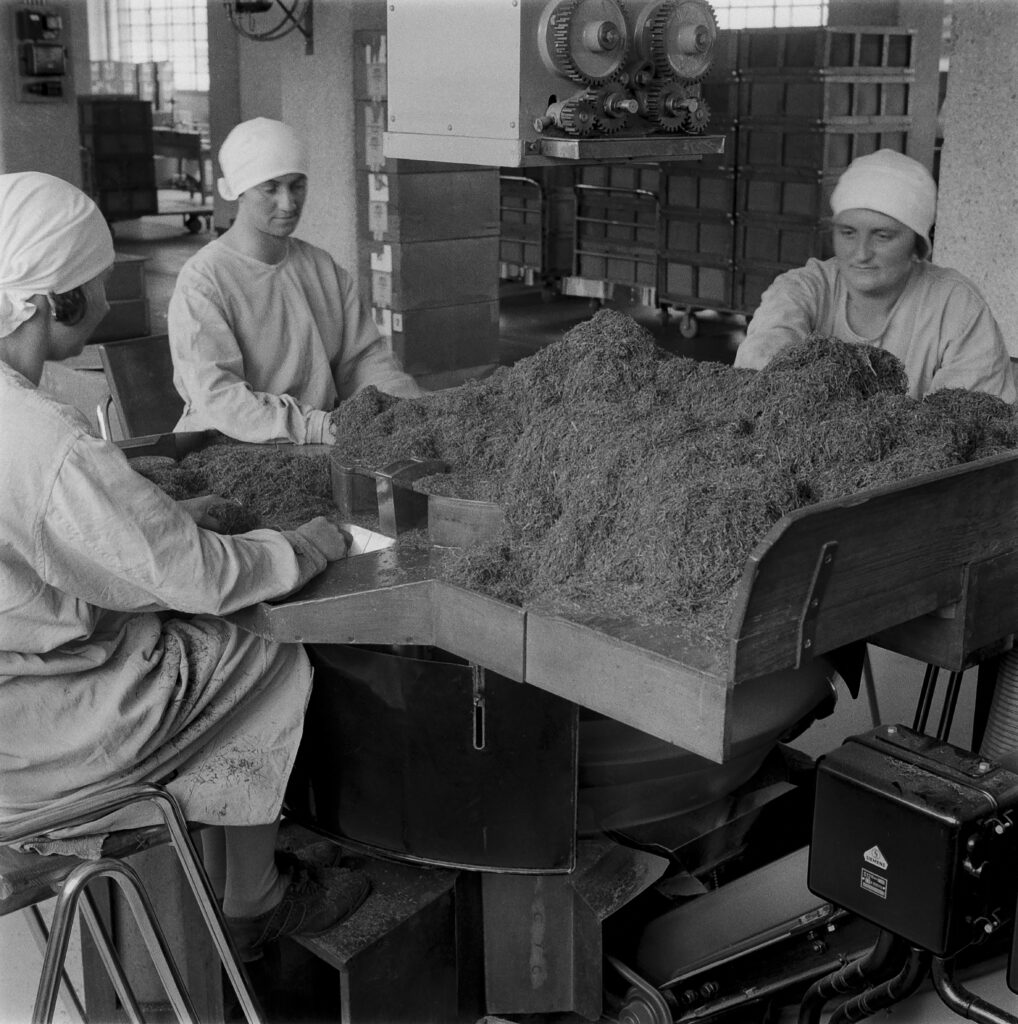
Today’s Tabakfabrik was built in stages during the Great Depression because production capacity became too small. Peter Behrens and his student Alexander Popp planned and built Austria’s first steel skeleton building in the New Objectivity (German: Neue Sachlichkeit) style: the 226.8 meter long, slightly curved cigarette production building (today: CASABLANCA building), the KRAFTWERK with high-pressure steam plant, magazines (SMART and HAVANNA buildings) and pipe tobacco production (FALK and DAMES buildings).
1929-1935
Gesamtkunstwerk Tabakfabrik
Peter Behrens, the inventor of corporate design, and Alexander Popp designed every single element for their work of art with 50,000 square meters of covered floor space: the colors (such as the turquoise “Linzer Blau”), the font and the furnishings, from tubular steel chairs at those tables where the tobacco leaves were torn apart from the stems, to door handles and coffee cups.
They focused on the people who would work in the Tabakfabrik in the following decades.
1938-1945
In the shadow of the swastika
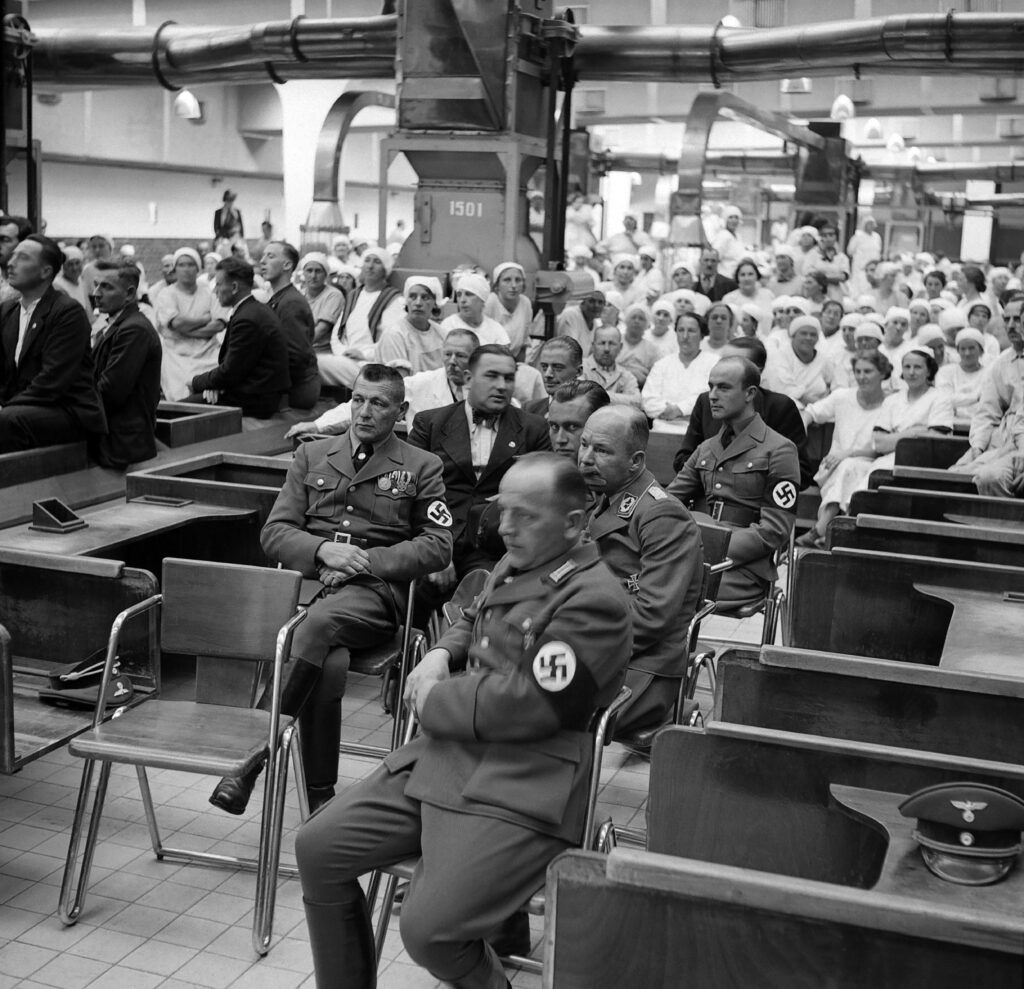
Under National Socialism, cigarettes were considered “essential to the war effort”. One of the architects, Alexander Popp, had already joined the NSDAP in 1935. Production continued until the surrender of
Linz without a fight on May 4, 1945. Shortly before this, five communist workers and resistance fighters
from the Tabakfabrik were murdered in the Mauthausen concentration camp.

1945-2000
Production was quickly resumed after the Second World War. While the number of employees fell from almost 900 in 1951 to less than 300 in 2009 due to rationalization measures, production increased enormously thanks to technological advances.
The era as a state-owned company ended in the mid-1990s with the gradual privatization.

2001-2009
End and new beginning
In 2001, the British Gallaher Group bought the company Austria Tabak from the Austrian state holding company, and in 2007 it was itself taken over by Japan Tobacco International . The Japanese owner closed down the business with 284 employees in 2009. The city of Linz subsequently bought the factory site to turn it into a location for new technologies, creative industries and start-ups.

©Sabine Kneidinger PHOTOGRAPHY
2010+
A new world is emerging
As with the construction in stages, the revitalization also took place in steps. Visionary tenants were selected from hundreds of interested parties to benefit from each other and create a unique, vibrant ecosystem.
Many pioneers still have their studios and offices in Tabakfabrik today. 10 years of investment, networking, conversion and expansion followed. In 2022, Tabakfabrik was proud to announce full occupancy – the revitalization of this architectural jewel has been a success.
1672: Austria’s first large-scale industry
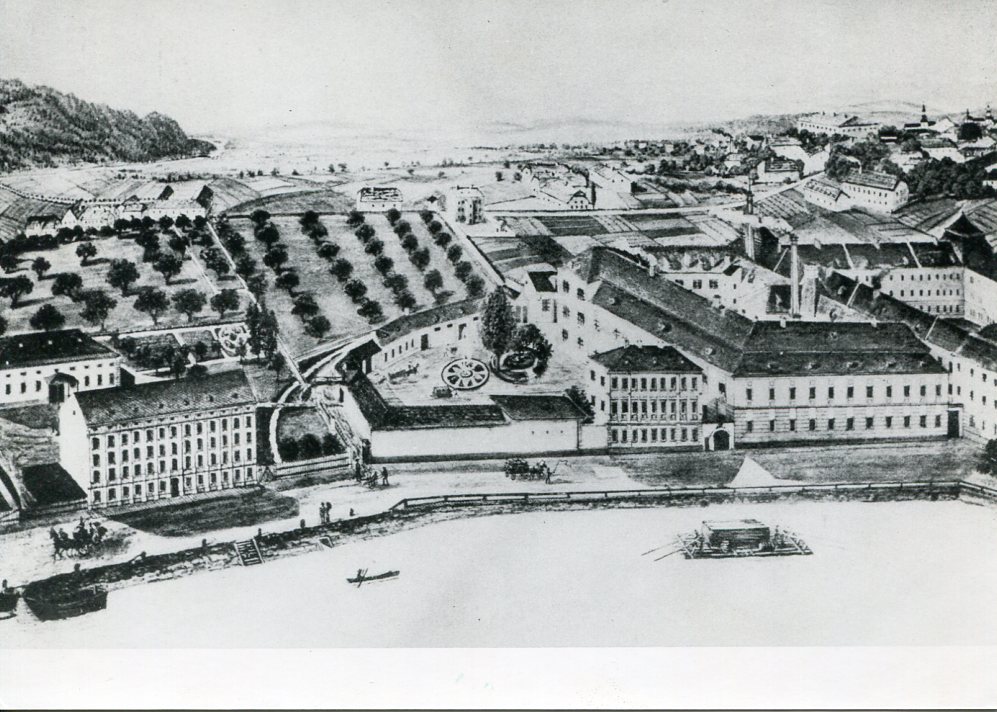
From 1672 to 1850, Austria’s first textile factory of the industrial age, the Linzer Wollzeugfabrik, was located on the site of today’s Tabakfabrik.
In 1672, Christian Sind(t), a citizen of Linz, was granted the privilege of establishing a wool factory. It developed into what is probably the oldest large-scale industry in the country. After several changes of ownership, the factory was nationalized by Maria Theresa in 1754 and initially produced sheep’s wool products. Later, the factory also produced fine cashmere wool cloth, carpets, printed tablecloths and upholstery fabrics.
The factory was a pioneer of its time, introducing fixed working hours and early social welfare. It coordinated tens of thousands of home-based workers, reaching its peak in 1791: of 49,292 employees, 100 worked in the factory, all the others from home. Over the centuries, the workforce also included forced laborers, many women, and children.
The architect Johann Michael Prunner gave the building a magnificent, palatial appearance between 1722 and 1726. This masterpiece of Baroque industrial architecture was one of Linz’s main attractions for a long time, but was demolished in 1969. Only the small “Zwirnerstöckl” still remains today.
Nordico Stadtmuseum Linz
1850: Tobacco products as an emergency measure – a difficult start
The history of tobacco production in Austria began long before the Linz factory was founded. Emperor Joseph II introduced the Austrian tobacco monopoly as early as 1784. This state right of sovereignty covered the cultivation, production and sale of tobacco. The monopoly was gradually extended to the entire monarchy. In order to meet the increasing demand, new production sites were to be built. After lengthy negotiations, the buildings of the former wool factory in Linz were chosen. In 1850, the building complex was acquired and adapted for tobacco production. On June 26, 1850, the Tabakfabrik Linz began operations with 70 workers.
The early years were not easy. The factory was met with skepticism by the rural population and it was difficult to find workers. Nevertheless, the production of cigars, smoking tobacco and chewing tobacco began. Initially, mainly cheap “popular cigars” were produced. However, the quality was convincing and soon more expensive varieties such as Britanica or Trabuco were added. Experienced workers from other factories were brought to Linz to start production. Working conditions were tough and wages were low, but the factory grew steadily. Nine years after opening, over 1,000 people were already employed here.
A new chapter began with the advent of the cigarette in the late 19th century. Machine production of cigarettes began in Linz in 1904, including the popular “Drama” and “Sport” varieties. The factory was continuously expanded and modernized, and the output increased rapidly. The First World War brought great challenges, as raw materials became scarce and even substitutes such as beech leaves had to be added. After the collapse of the monarchy, the tobacco industry lost many of its factories. Linz was restructured and, despite economic crises, developed into an important location that steadily increased production and provided work for thousands of people.
Visionary architecture
The Tabakfabrik, designed by architects Peter Behrens and Alexander Popp, is a milestone in Austrian industrial architecture. The buildings were constructed between 1929 and 1935 – during ongoing production, in the middle of the global economic crisis.
As one of the first steel skeleton buildings in Austria, the construction was revolutionary. This construction method not only enabled flexible interior spaces, but also continuous bands of windows. The result: bright, light-flooded workspaces that focused on the well-being of the workers. The entire architecture followed the work processes, creating a highly efficient organization.
From the architecture to the furniture to the typeface, everything was developed especially for this building. Behrens and Popp thus created a consequent work of art that optimally combined functionality, aesthetics and good working conditions.

Hermann Steindl
In the shadow of the swastika
Under National Socialism, cigarettes were considered “essential to the war effort”. One of the architects, Alexander Popp, had already joined the NSDAP in 1935.
Despite air raids and the partial black camouflage coloring of the factory, production continued under high pressure, with up to 50 working hours per week. From 1941, tobacco shortages hampered production; in the final phase of the war, only a single cigarette brand could be produced. In 1943, an aerial bomb hit a tobacco warehouse, whereupon the stocks were moved to the surrounding area. In April 1945, the Linz Tabakfabrik was ordered to be blown up by the Nazi regime, but courageous workers prevented its destruction.
Production continued until Linz was surrendered without a fight on May 4, 1945. Shortly before, five communist workers and resistance fighters from the Tabakfabrik were murdered in the Mauthausen concentration camp.
Archiv der Stadt Linz
The Tabakfabrik resistance fighters
A few days before the end of the war, on April 28 or 29, 1945, the Linz resistance fighters and former Tabakfabrik workers Rudolf Kühberger, Hugo Müller, Heinrich Obermayr, Anton Schmelensky and Josef Teufl were murdered by the National Socialists together with other political prisoners in the Mauthausen concentration camp. The order came from the then Gauleiter August Eigruber.
Tabakfabrik Linz has honored Sepp Teufl and the four other murdered workers and resistance fighters Rudolf Kühberger, Hugo Müller, Heinrich Obermayr and Anton Schmelensky with a memorial plaque since 2002. Tabakfabrik was the first company in Linz to honor employees who died in resistance against the Nazi regime in this way. In 2013, unknown perpetrators stole the memorial plaque, which was recovered and reinstalled. Today, it commemorates these brave men at the main entrance to CASABLANCA. We will never forget them.
From the post-war period to high-tech production
Since its opening in 1935, production here has been continuous, with one brief exception: After the end of World War II, the machines restarted after 18 days to produce cigarettes for the civilian population.
In 1949, the tobacco monopoly was reorganized, and the Austrian state took over “Austria Tabakwerke AG, formerly Österreichische Tabakregie” once again. A consistent rationalization process stated: While the number of employees shrank from 887 in 1951 to 284 in 2009, cigarette production increased enormously.
In the 1960s, the top rolling process revolutionized the production of filter cigarettes. The round cigarette became the standard and productivity continued to rise.
In the 1980s, production and packaging machines were combined into units, which further increased efficiency. At this time, the company name, which dated back to the National Socialist era, was shortened to “Austria Tabak”.
Hermann Steindl
Privatization and the end
The gradual privatization of Austria Tabak began in the mid-1990s. This meant that the high level of job security for employees was lost. In 2001, the company was finally sold in its entirety to the British Gallaher Group. Six years later, Japan Tobacco International (JTI) took over the Group. The focus shifted to foreign locations and the Linz factory became less important. In September 2009, JTI closed Tabakfabrik Linz down. This marked the end of the 159-year era of tobacco production at the site.
Social pioneer over the decades
As a state-owned company, the Tabakfabrik set social standards early on. Factory doctors cared for the health of the workforce. There was a factory kitchen, washrooms and even a nursery. Women benefited from extended maternity protection. The company health insurance fund and the convalescent homes also bore witness to the welfare of the Austrian tobacco company.
In the 1950s, the factory responded to the housing shortage in Linz by building more than 100 apartments. The new company kindergarten became a model facility.
Hermann Steindl
Factory kitchen, washrooms, doctor’s room & kindergarten
Open due to renovation
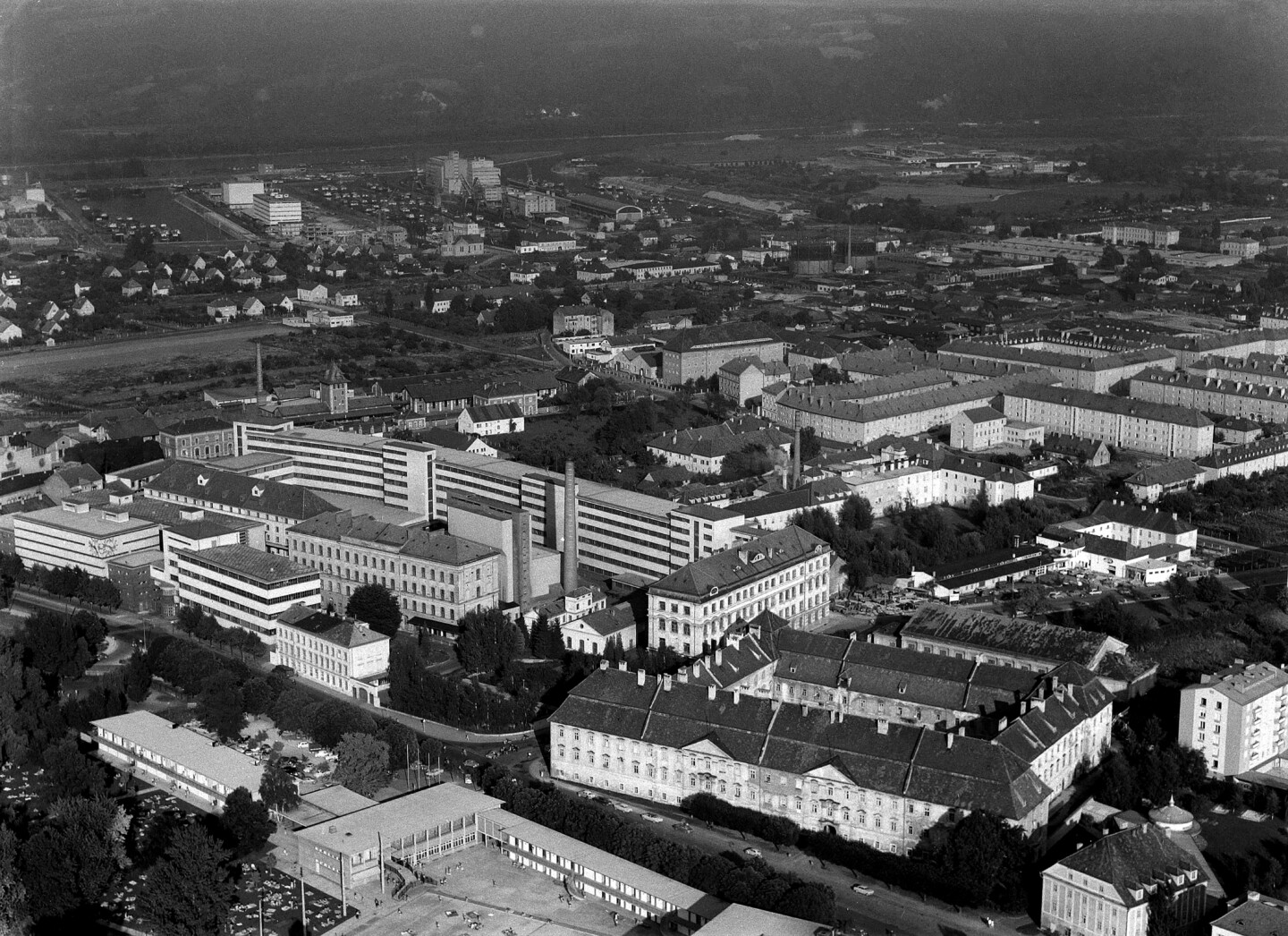
Where cigarettes were once manufactured, thousands of people now work in more than 250 organizations.
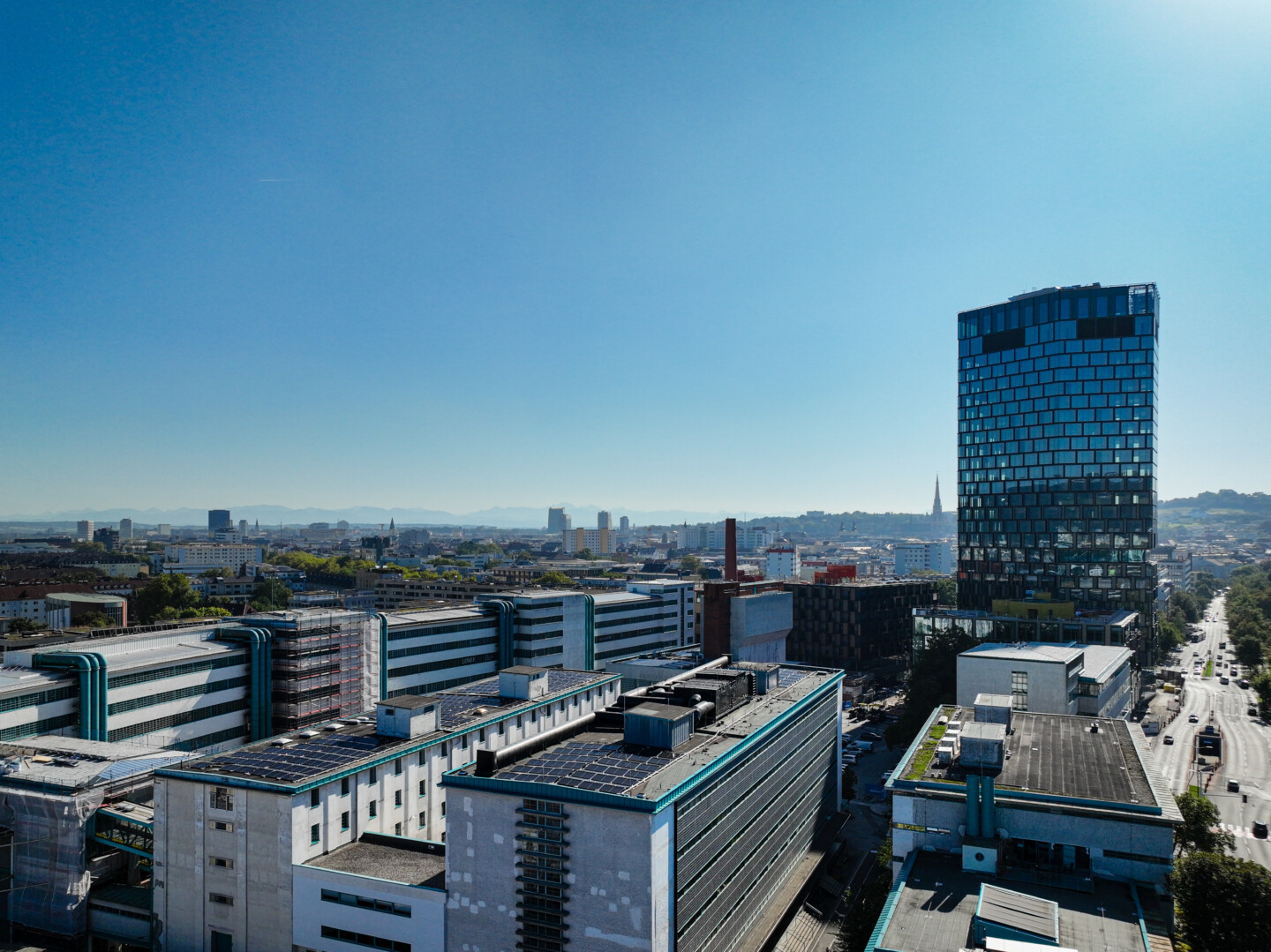
The city of Linz acquired the site in 2009 and launched a unique development process. Under the motto “Open for conversion“, the factory was gradually revitalized. Legendary events such as the Ars Electronica Festival attracted thousands and showed the potential of the old walls. The first tenants, the so-called pioneers, quickly moved in, in line with the principle of the Collaborative Corporations. A dynamic ecosystem of start-ups, artists, designers, creatives, social initiatives, successful companies, educational institutions, restaurants… emerged. The names of the buildings, such as CASABLANCA, DAMES or FALK, are reminiscent of old cigarette brands and thus connect history with the future. Instead of cigarettes, ideas, creative compositions, applications for artificial intelligence, services, sustainable goods and much more are being created on the site today.
Mit der Fertigstellung des QUADRILL 2026 schlug die Tabakfabrik ein neues Kapitel auf. Sie blickt in ihre Zukunft als Kreativquartier, als Hub für Startups und Innovationen. Sie ist ein Ort zum Arbeiten, Wohnen, Leben – ein neues Stadtviertel für Linz.
Hermann Steindl
The development of the Tabakfabrik
Woolen goods factory, tobacco factory, city quarter: the successful transformation in figures.
0
Workers
started tobacco production in Linz in 1850
0
People
produced 4 billion cigarettes in 1951
0
People
When the plant was closed in 2009, the workforce comprised
0
People
worked, learned, taught at Tabakfabrik Linz in 2025
Thank you
To the Archive of the City of Linz and the Nordico City Museum Linz for the photos & documents!