Report error
We recently launched our website - help us to improve it!
Please fill in our error report.
Report errorHow Tabakfabrik set new standards
Architects Peter Behrens and Alexander Popp planned the new Tabakfabrik, a milestone in Austrian industrial architecture. The buildings were constructed in stages between 1929 and 1935, as production had to continue uninterrupted in the middle of the Great Depression.
Learn more about the architecture of Tabakfabrik, take a look behind the scenes of the building, discover details such as the steel window bands and the corporate design.
Pioneer of modernity: the steel frame building
The Tabakfabrik is one of the first steel skeleton buildings in Austria. This innovative construction not only enabled flexible use of the rooms, but also made the building a pioneer of its time. The outer walls only served as a shell, which allowed the architects to create flexible interior spaces and continuous bands of windows. These horizontal window fronts characterize the exterior appearance and provide bright, light-flooded workspaces inside.
The picture shows Building 1 (today: CASABLANCA), the former cigarette manufacturing building of Tabakfabrik Linz. Also known as the “banana building” thanks to its spectacular curvature, it has written architectural history. As Austria’s first large steel skeleton building in the New Objectivity (German: Neue Sachlichkeit) style and a masterpiece of international modernism, it has captivated generations of architecture students throughout its existence.
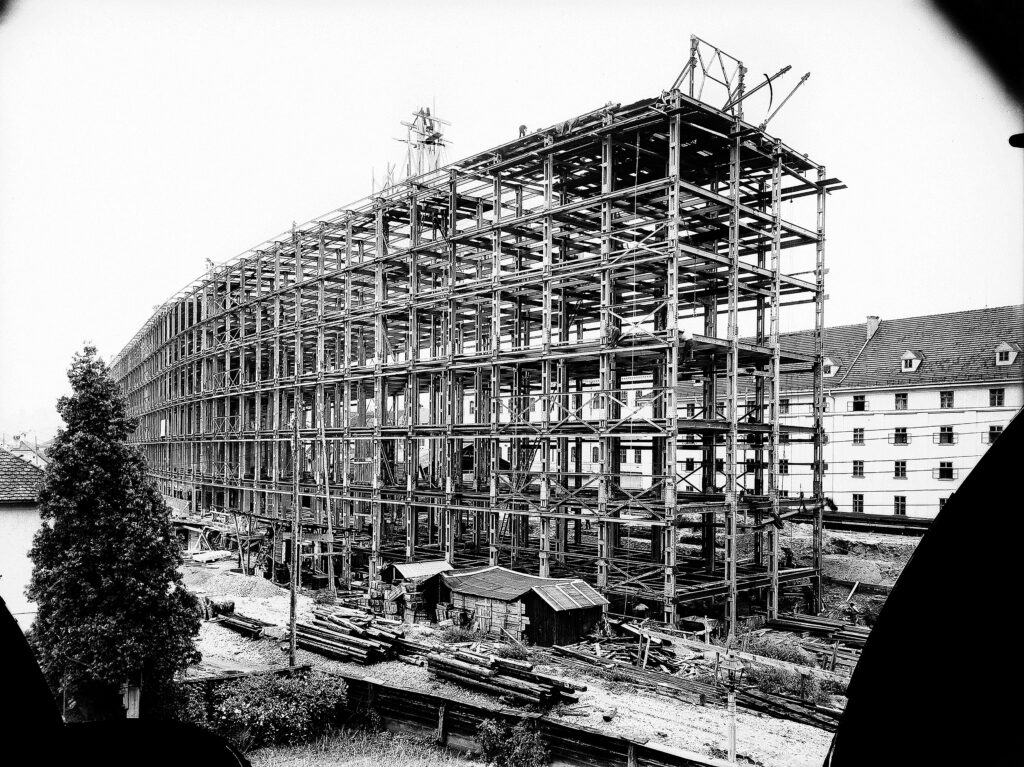
Archiv der Stadt Linz
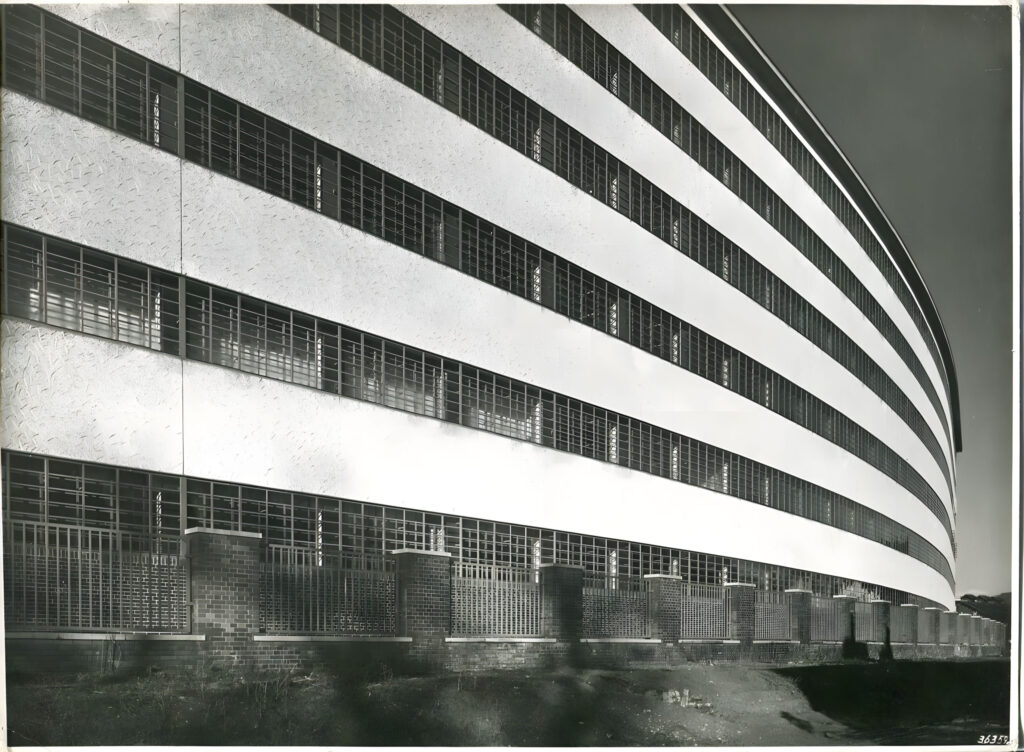
Nordico Stadtmuseum Linz
Form follows work
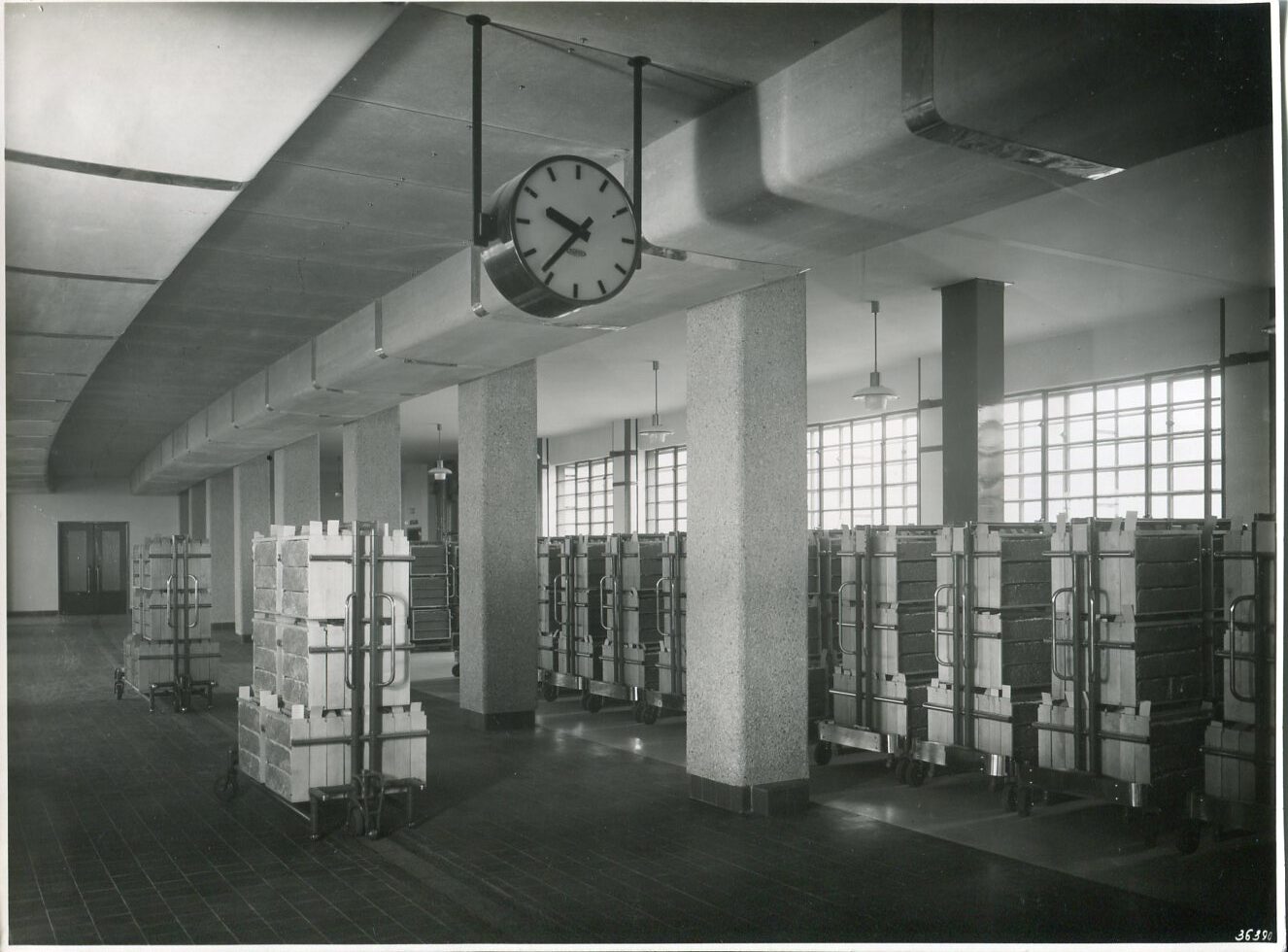
The entire architecture followed the workflow and the movements of the machines, which enabled a highly efficient organization of factory operations. Tobacco processing required a constant humidity of 80 percent, similar to tropical conditions. To achieve this, steam was generated in the power plant and fed into the buildings. At the same time, the steel frame with concrete cladding offered a very high insulation value compared to conventional buildings at the time. A separate KRAFTWERK supplied all the buildings with electricity, heat and steam.
A work of art for people
The result was a consequent work of art in which everything from the architecture, materials and furniture to the typeface was developed specifically for this building. Behrens and Popp created a modern factory building that optimally combined functionality, aesthetics and good working conditions.
The architects put the workers at the center of their designs. They also paid attention to their health: Spacious, bright workspaces, dust extraction systems and ventilation panels ensured hygiene and well-being in the workplace.
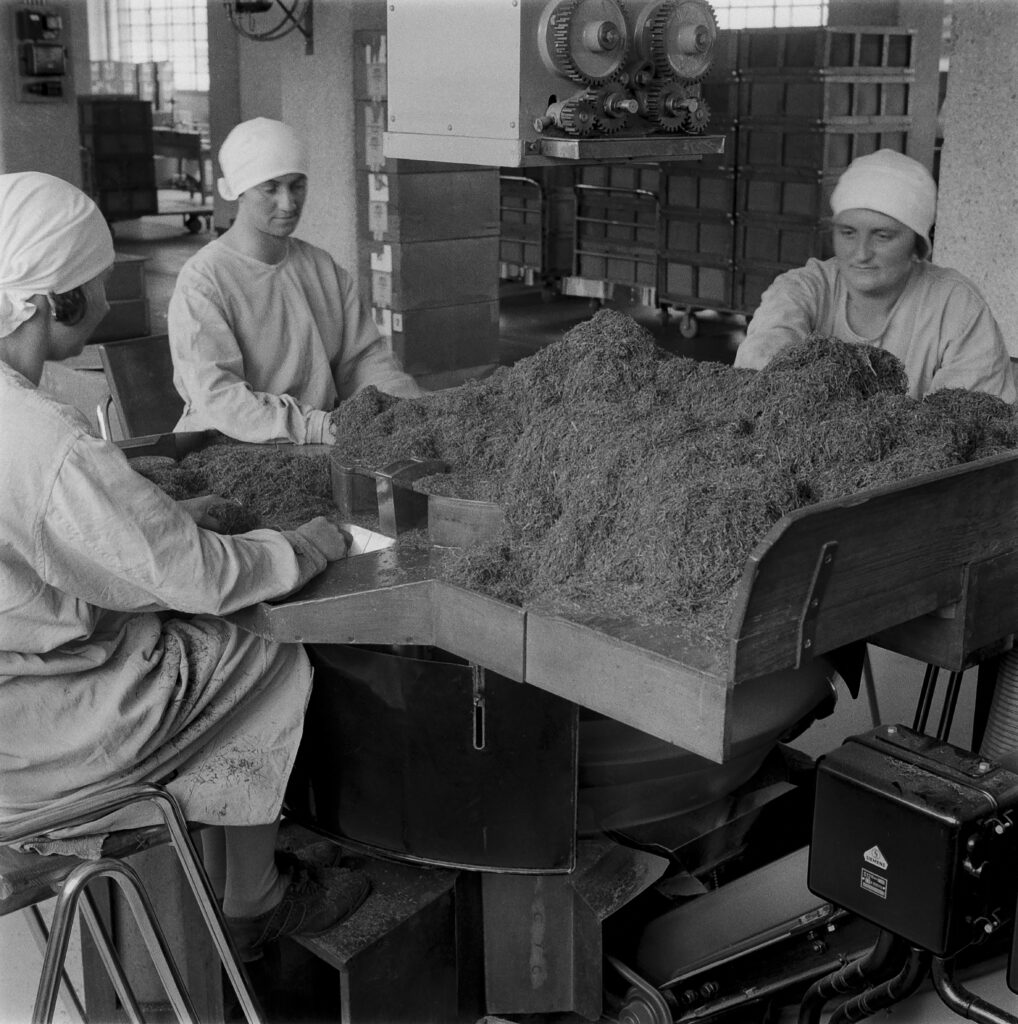
Archiv der Stadt Linz
Bauhaus style – or not?
What is New Objectivity?
The architecture of the Tabakfabrik is world-famous. Its clear lines and functional aesthetics are still inspiring today. The term “Bauhaus” is often used in this context. But this is a widespread misconception. Tabakfabrik is actually a prime example of another, closely related style: New Objectivity (German: Neue Sachlichkeit).
New Objectivity was a movement in the 1920s that consciously set itself apart from playful styles such as Expressionism. As the name suggests, the focus was on function, purpose and a functional design language. Peter Behrens, the ingenious architect of the Tabakfabrik, was one of the pioneers of this movement. As early as 1907, he was a co-founder of the Deutscher Werkbund, which set the course for modern, industrial design and functional architecture.
What is the difference to the Bauhaus style?
Although the famous Bauhaus existed at the same time and is often used as an umbrella term for all modernist architecture, it is an independent school and style. However, Peter Behrens was neither a teacher nor a student at the Bauhaus. The Tabakfabrik is therefore not a Bauhaus work, but a masterpiece in its own right. However, both styles – New Objectivity and Bauhaus – belong to the great New Building movement that revolutionized 20th century architecture. They are therefore close relatives with a common goal: a modern, clear and functional design.
New construction 1929-1935: High expectations of productivity
Why was the Tabakfabrik built to such a high standard and with such elaborate technology? The book “Die Neubauten und Betriebseinrichtungen der Tabakfabrik in Linz” from 1936 explains this as follows: State-of-the-art technical achievements were to be exploited, and operations were to be centralized and rationalized for mass production. The more systematic organization of ancillary operations was intended to reduce superfluous transport, administration and storage costs. Another argument in favor of the high-quality new building was that cheaper tobacco required higher humidity. The Tabakfabrik was to produce with 60-75 percent humidity at 18 degrees to a maximum of 25 degrees in the working rooms, 95 percent in the “dressing chambers” for pre-soaking the tobacco and 20 degrees with 70-80 percent humidity in the dissolving hall (regardless of whether the outside temperature was -20 degrees or +35 degrees). This made it possible to change the mixing ratio between cheaper and more expensive varieties and reduce material costs. At the same time, the high humidity was supposed to reduce material loss by seven percent, as less small material was produced. According to estimates at the time, the annual savings potential would amount to 3.4 million schillings per year.
On the other hand, the investment costs for the new building amounted to 25 million schillings.
At the same time, the new factory would be able to produce products of the quality that “domestic and foreign smokers today demand from a modern large company. The more Austria develops into a tourist destination, the more important it is to maintain the quality of tobacco products at the level of foreign countries that work with the latest methods.” In addition, the output of all products should be doubled:
Production in 1928
| 1,5 | Billions of cigarettes |
| 1,5 | Millions of kilograms of pipe tobacco |
| 750.000 | Kilogram of cigarette tobacco |
Planned new building production
| 3 | Billions of cigarettes |
| 3 | Millions of kilograms of pipe tobacco |
| 900.000 | Kilogram of cigarette tobacco |
Book tip: The new buildings and operating facilities of the Tabakfabrik in Linz (1936)
Get to know the economic background, look at the details of building materials and construction.
High quality material
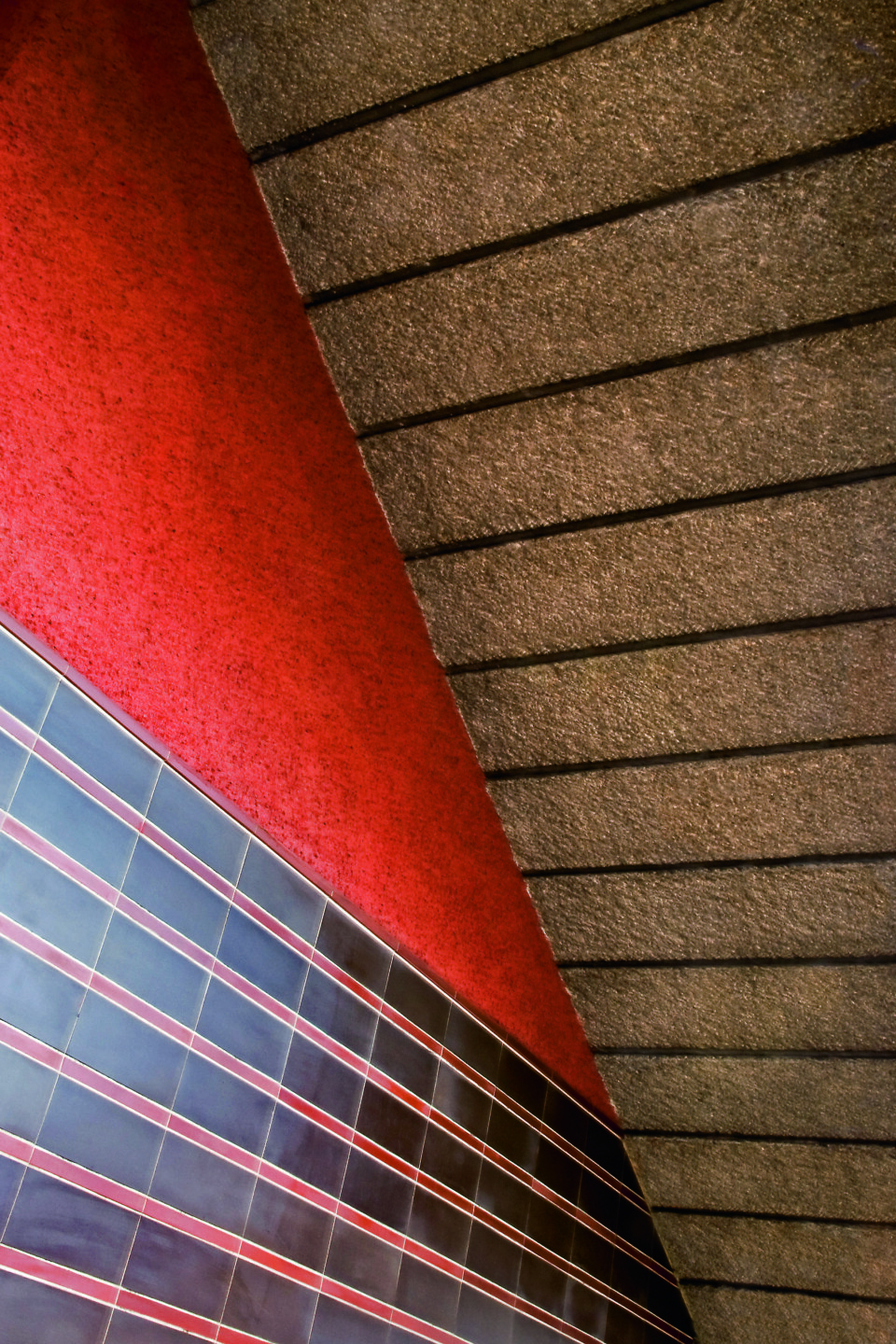
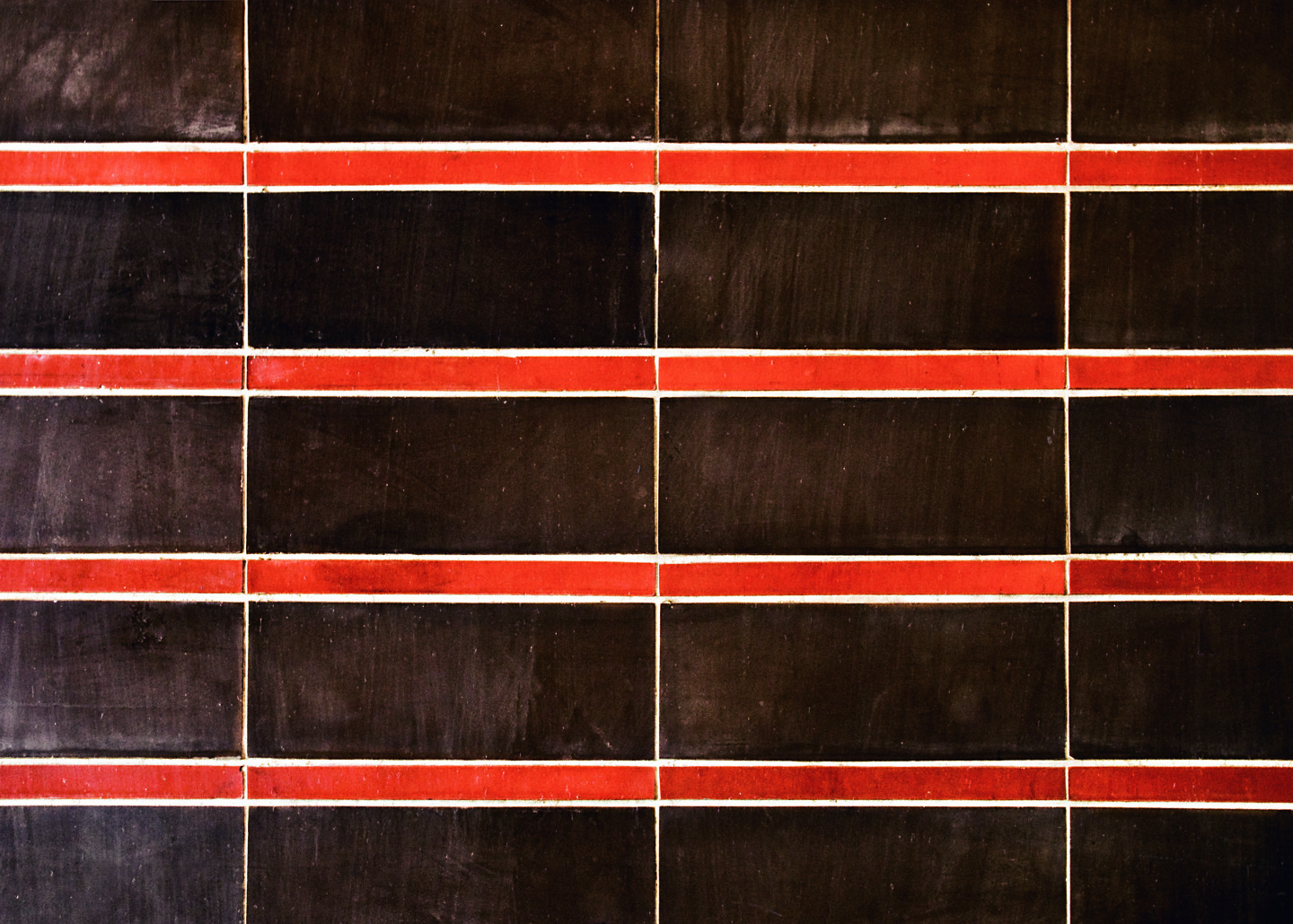
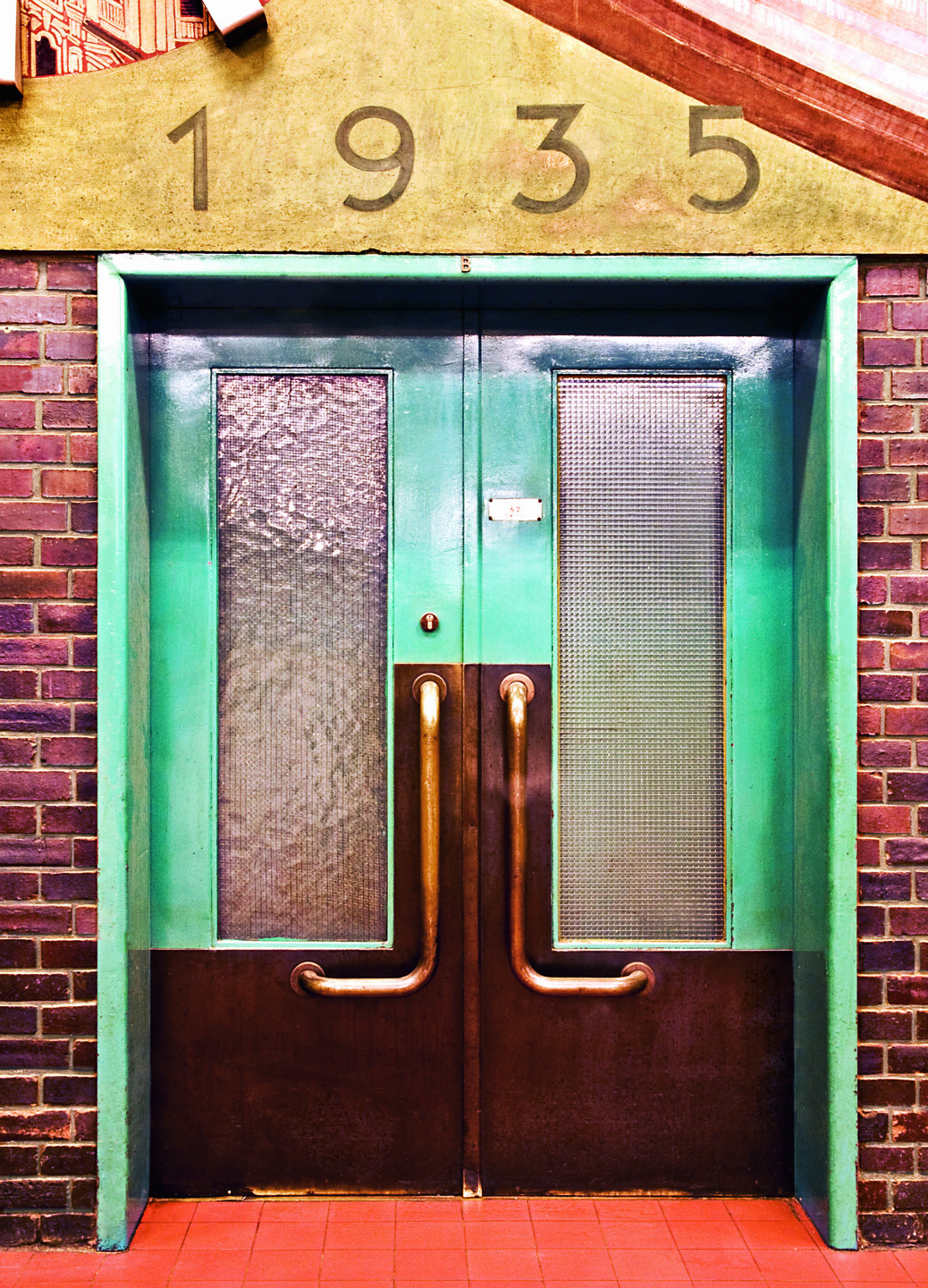
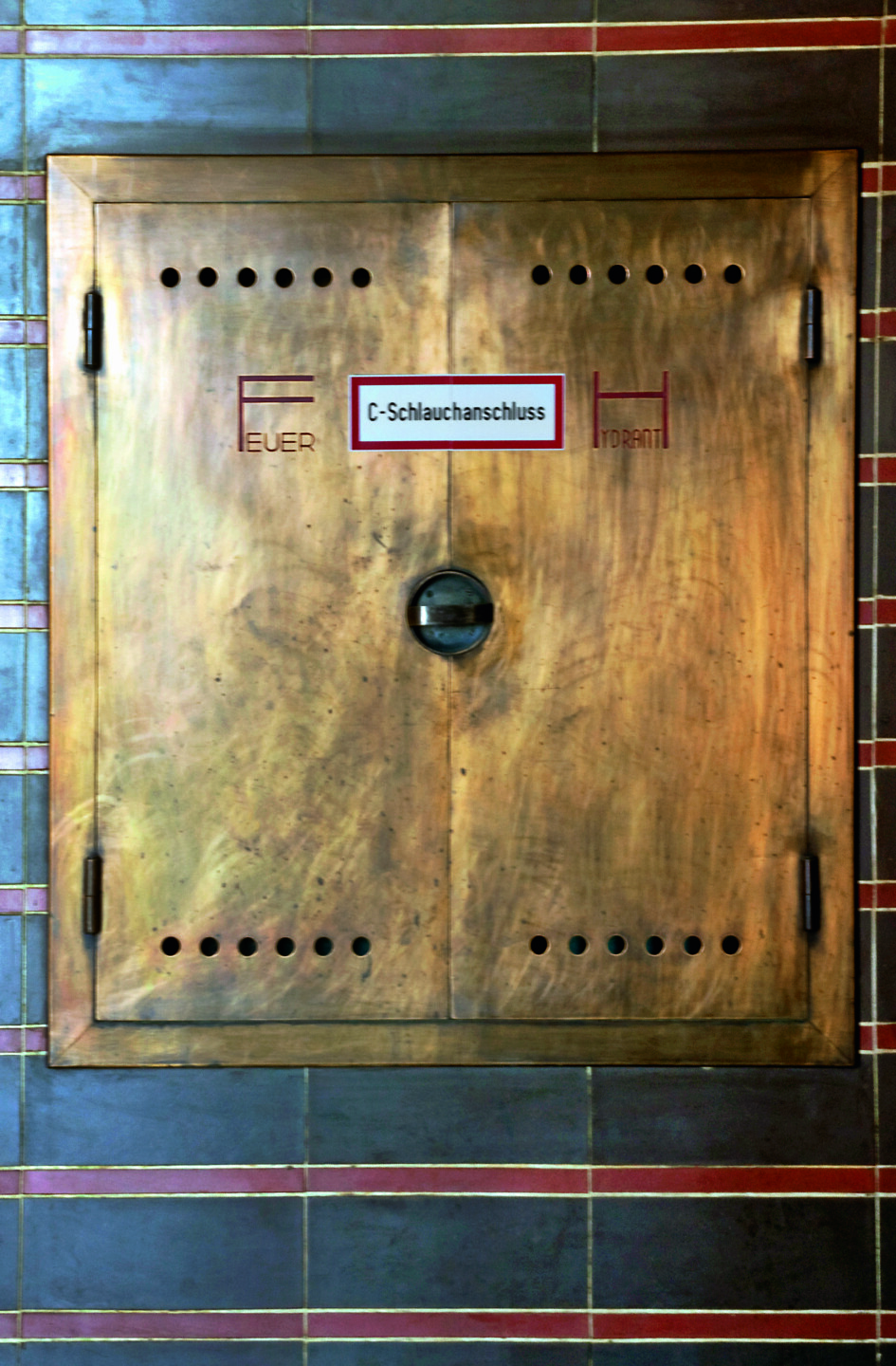
The Tabakfabrik was built using innovative construction techniques and high-quality materials: Red clinker bricks cover the plinths, the cornices were finished to match the stonework, the fine plaster was given a visually appealing texture with a trowel, the artificial stone columns were worked by hand to give them their grained texture. All staircases are made of smooth polished artificial stone. Cellular concrete (made from cement water and soap foam) and cork insulated the walls. The handrails in the stairwells, the doors (exterior doors, interior doors, historic elevator doors) are made of tombac, a copper-containing brass alloy. The steel frame construction was designed to withstand vibrations from heavy machinery. Works of art were also part of the building from the very beginning.
It was argued at the time that this quality was economical, as the building fabric would remain flawless for decades even under the heaviest use. In addition, possible later conversions were already planned during construction. Today’s use shows that the Tabakfabrik still meets these requirements.
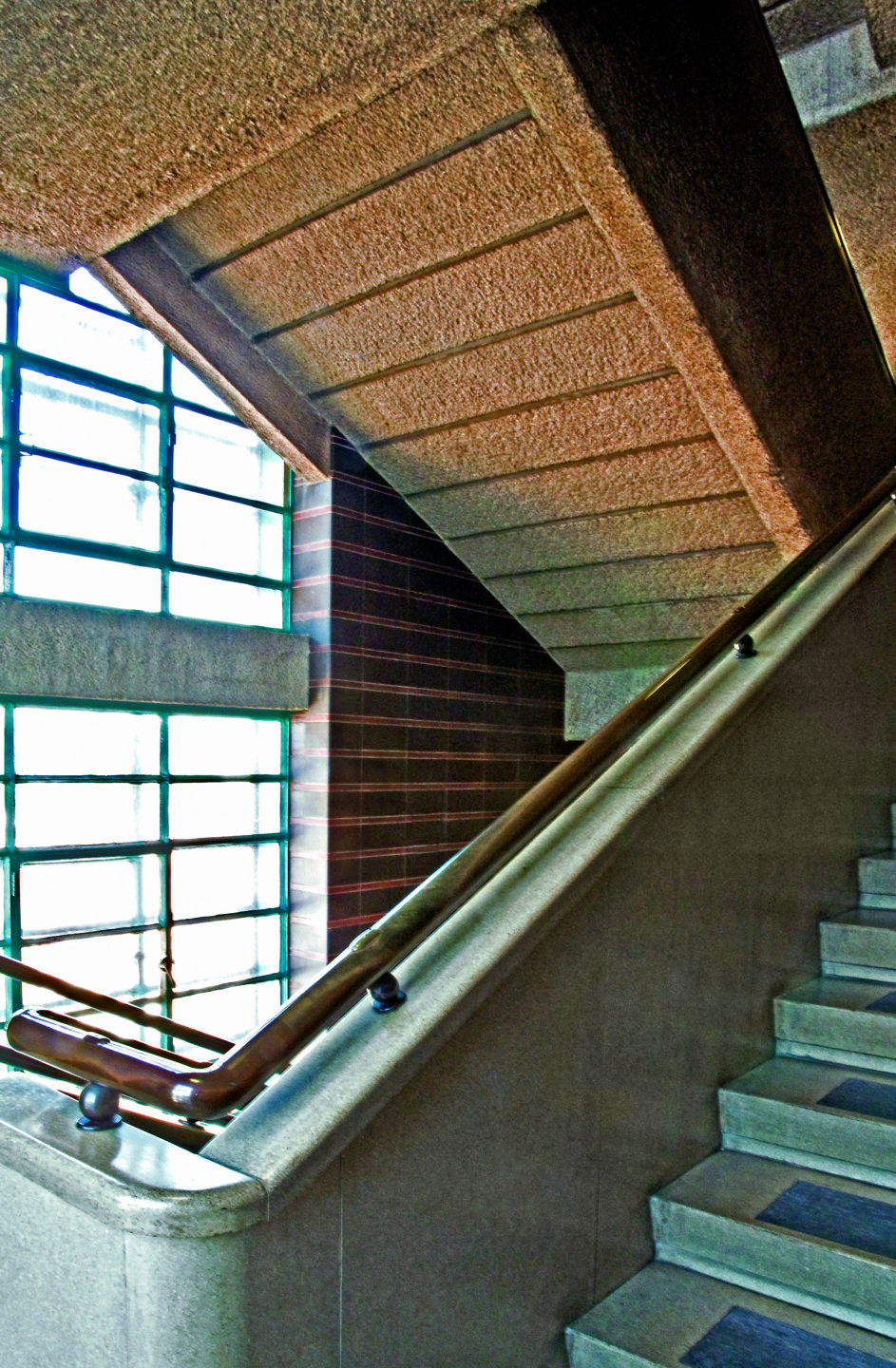
Hermann Steindl
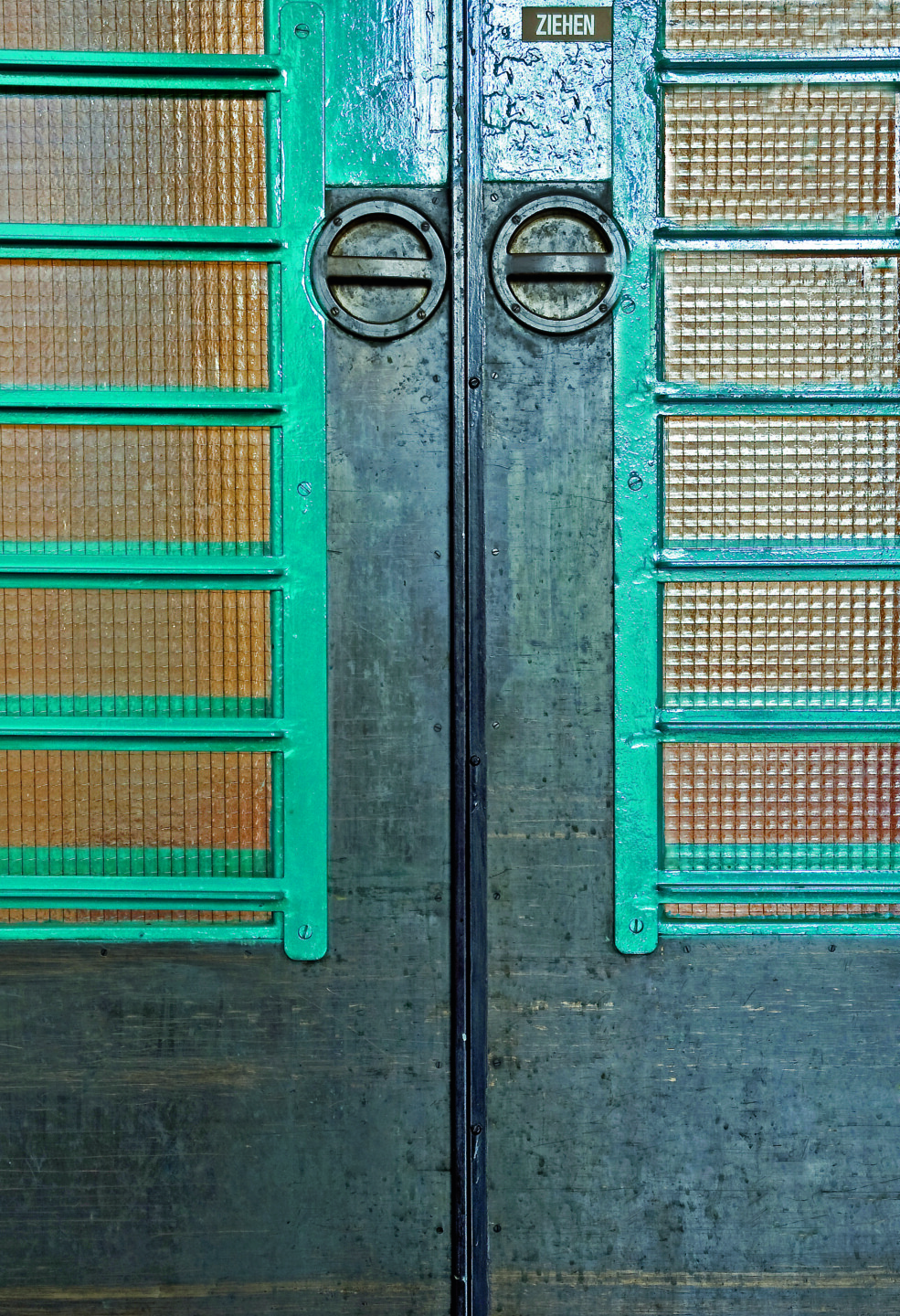
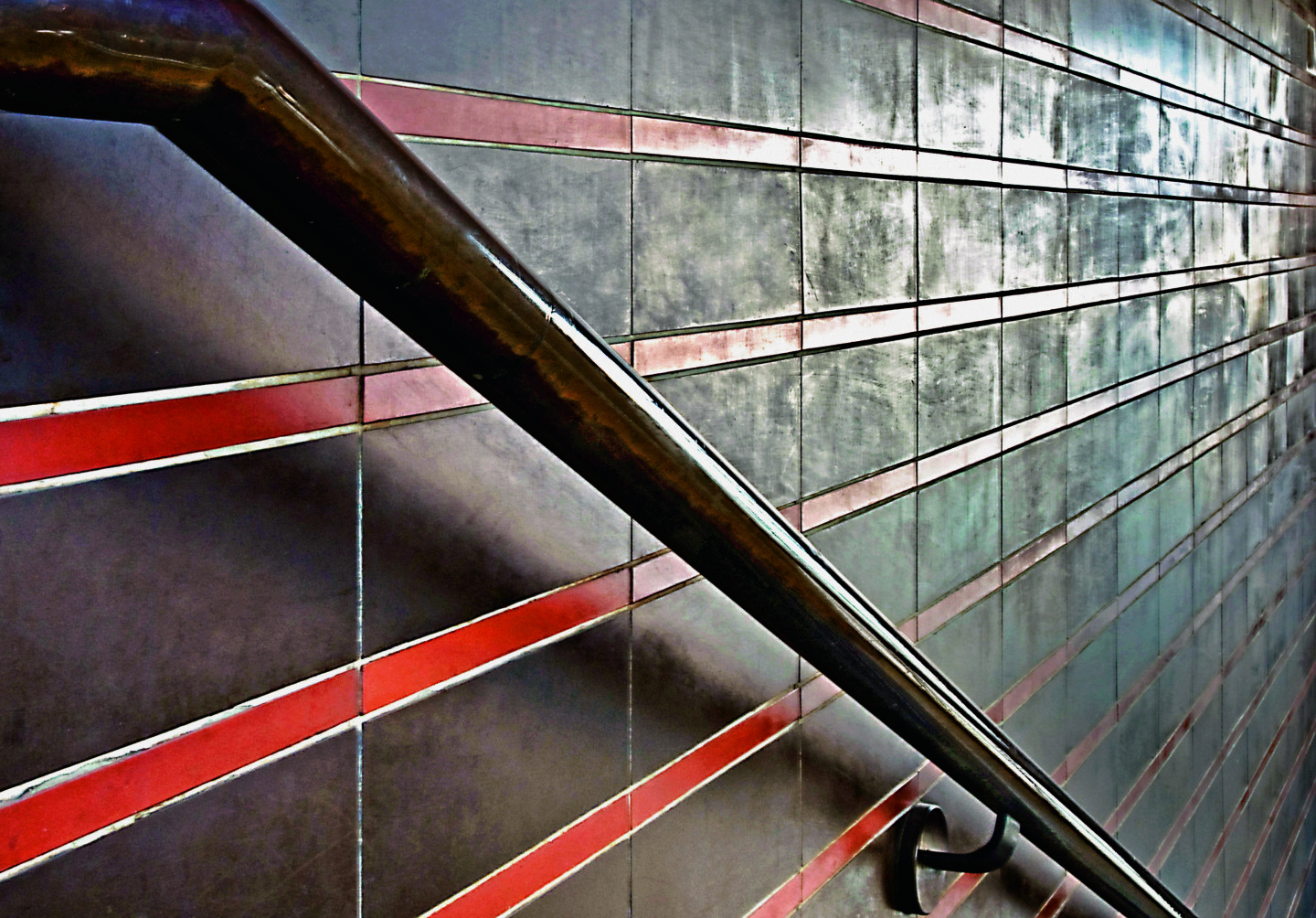
Corporate Design
Peter Behrens is known as a pioneer of functional architecture and industrial design. He is considered as the prototype (“archetype”) of the industrial designer and at the same time the inventor of corporate design. In addition, some of the architects who would later become famous worked in the architectural office he led at the same time, including Walter Gropius (who founded the Bauhaus in 1919) from 1908 to 1910, Ludwig Mies van der Rohe from 1908 to 1912 and Le Corbusier from 1910 to 1911. In Vienna, he became Otto Wagner’s successor at the Academy of Fine Arts in 1922 – director of the architecture department, where Alexander Popp studied.
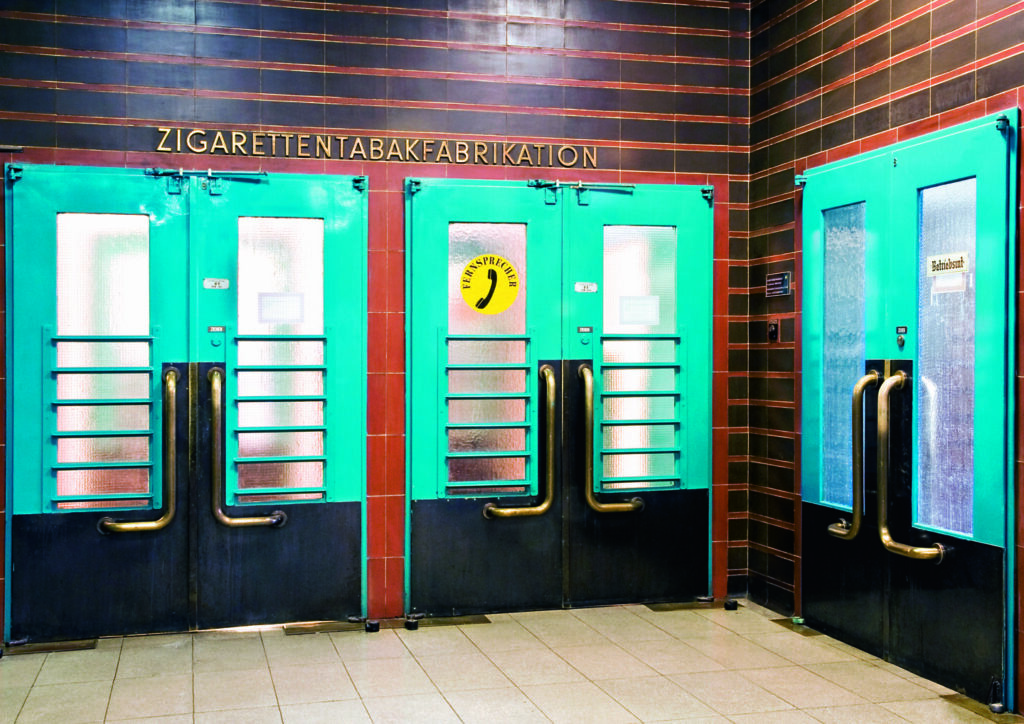
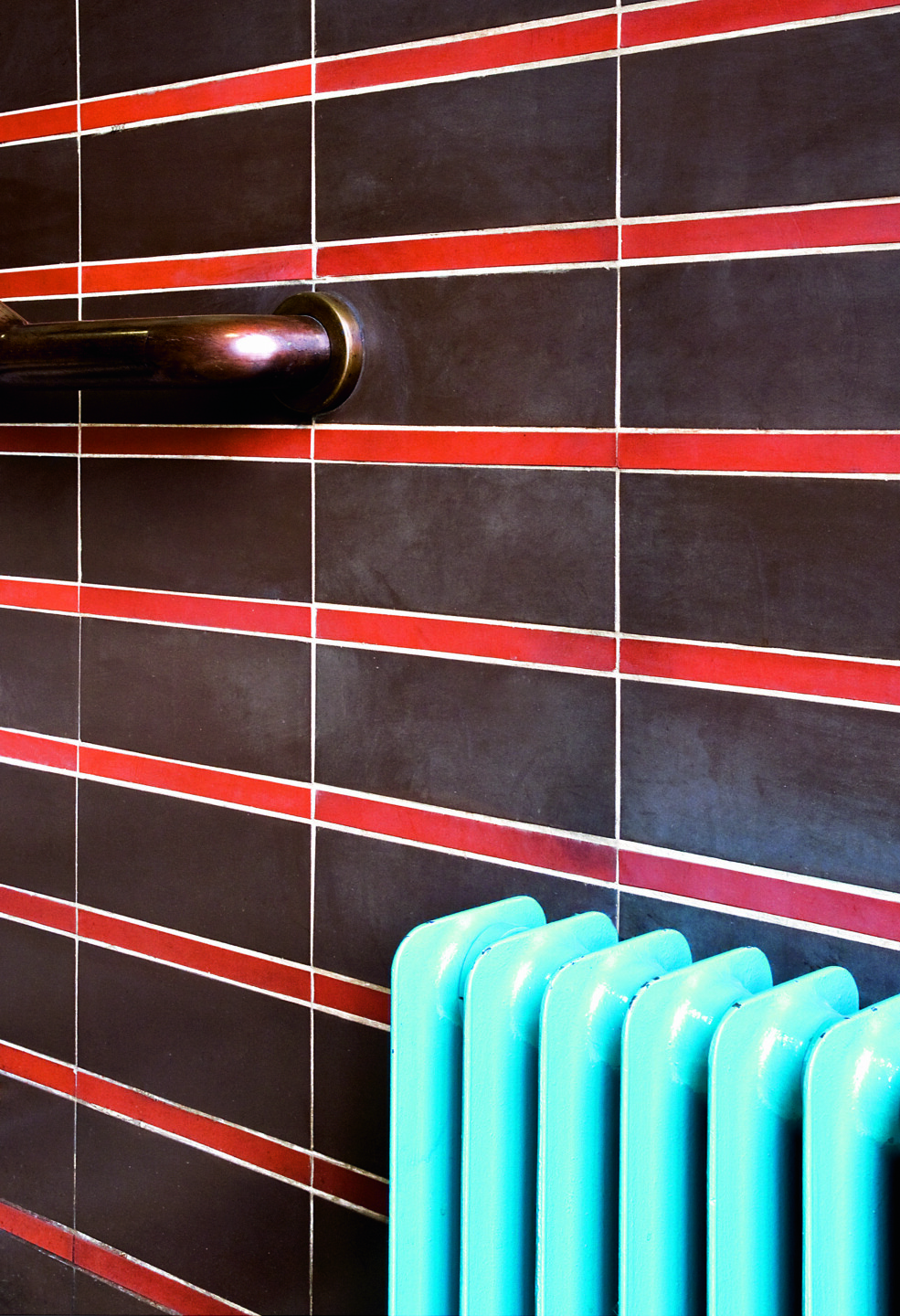
The attention to detail that characterizes the Tabakfabrik can be felt everywhere. It testifies to the architects’ comprehensive design intent, who created a true total work of art here. Peter Behrens and Alexander Popp designed every single element with 50,000 square meters of covered floor space: the colors (such as the turquoise “Linz Blue”), the unique typography of the lettering, the floor coverings and the furnishings, from the tubular steel chairs at the tables, where the tobacco leaves were torn apart from the stems, to the door handles, lamps and coffee cups. They focused on the people who would work in the Tabakfabrik in the following decades.
This extraordinary care pays off: even after decades, the stairwells still look modern and appealing. The iconic turquoise color, which is omnipresent here, has become the unmistakable trademark of the entire architectural jewel.
Hermann Steindl
Kilometers of windows bands
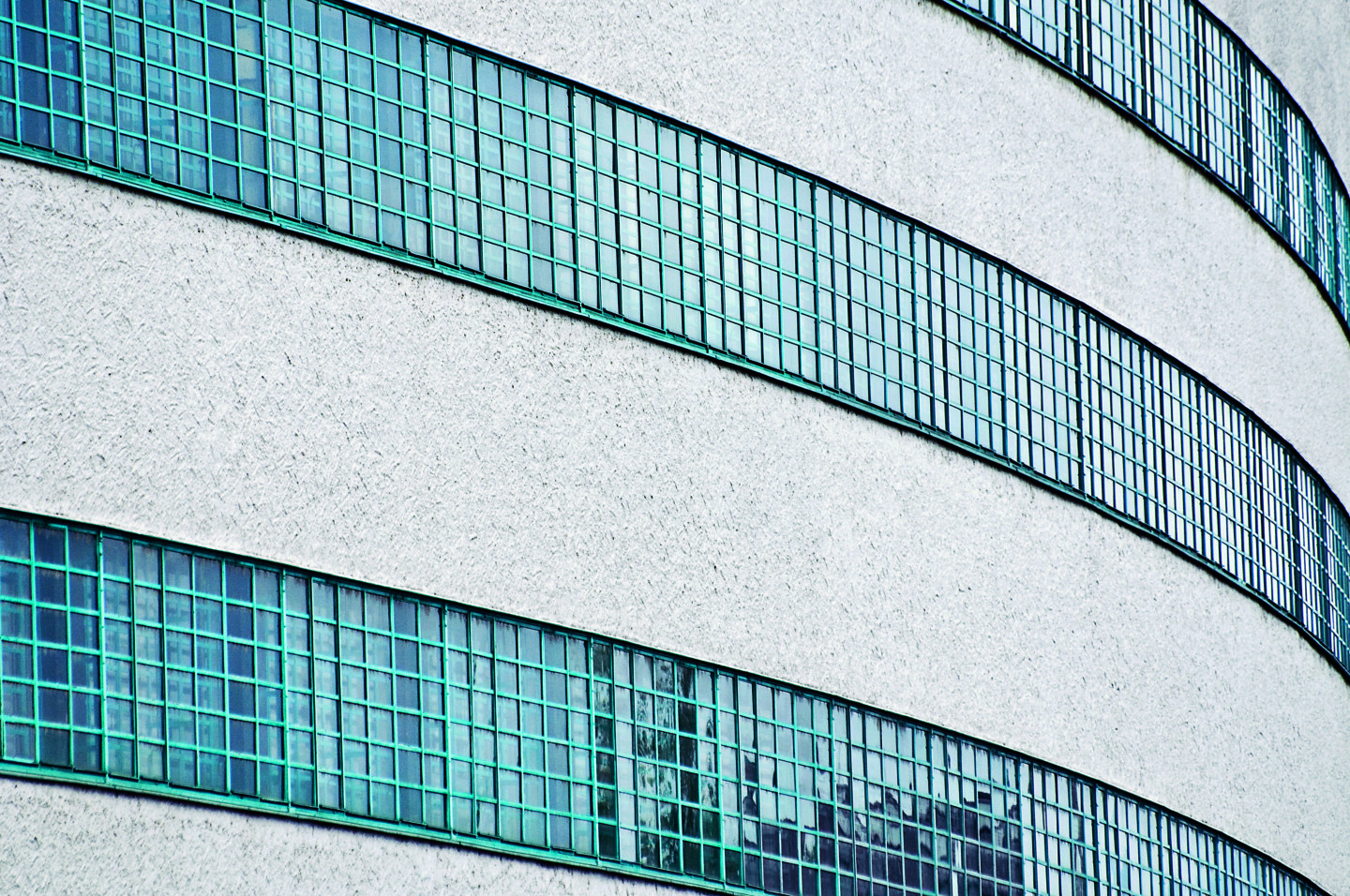
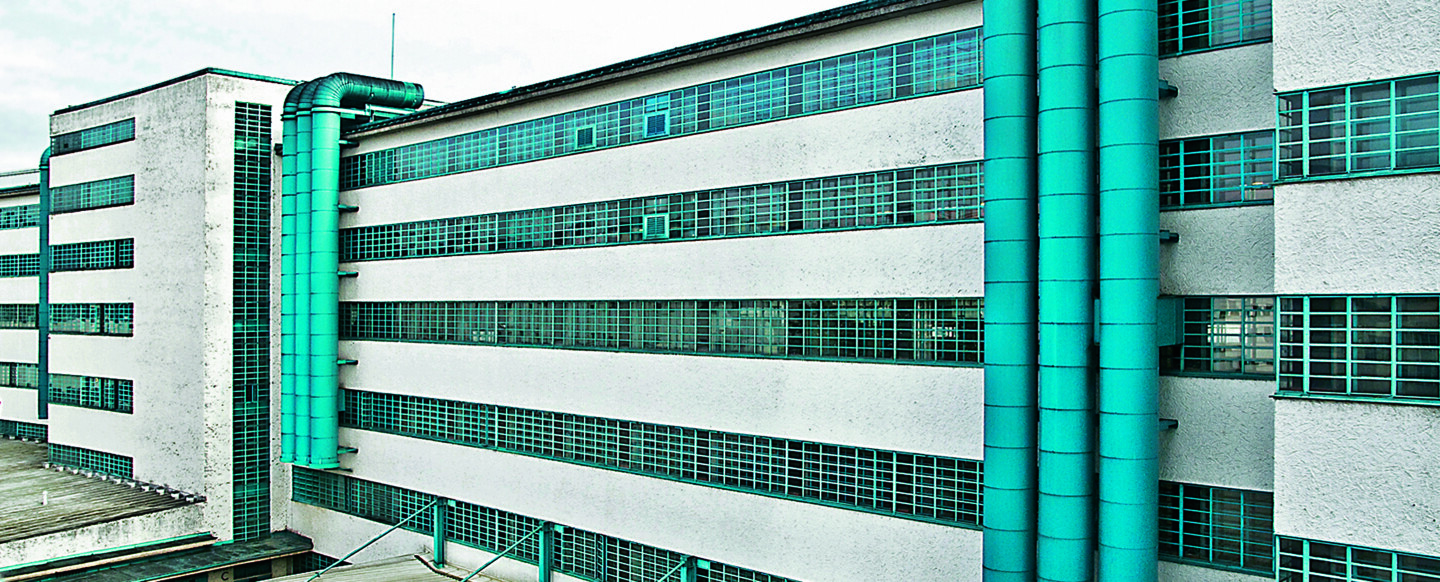
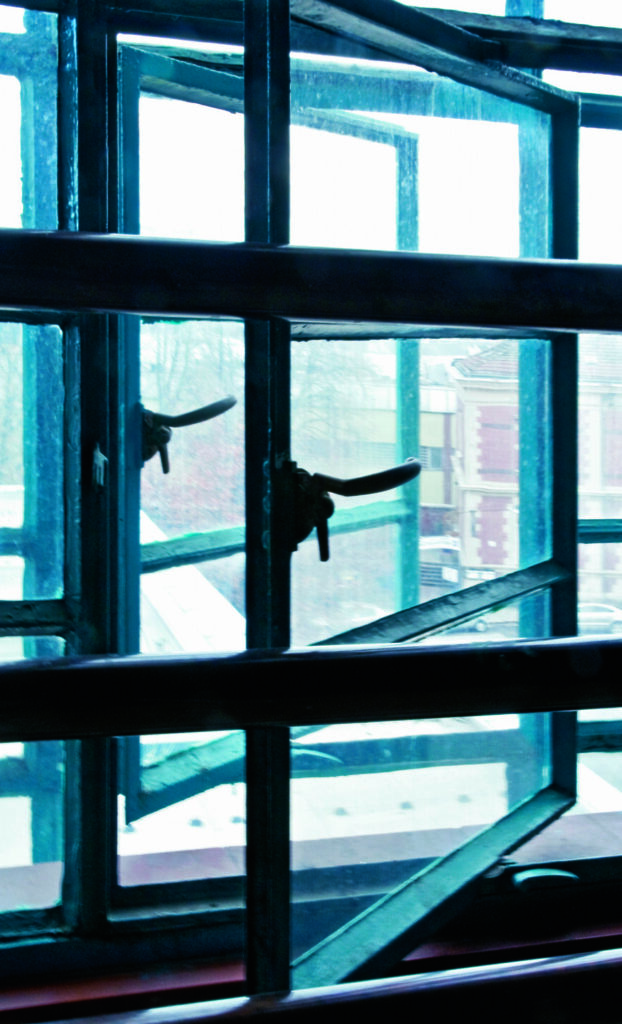
The kilometer-long windows bands are the trademark of Tabakfabrik Linz. In the former cigarette factory building alone, they stretch over 3,000 meters and provide bright, light-flooded rooms.
The windows are a masterpiece of technology and design. They are not only an aesthetic element, but also a functional solution that can withstand the demanding conditions of tobacco production with its high humidity. Special reversible sashes that rotate around the central axis ensure ventilation and tightness in the hot and humid rooms. The ventilation sashes, which had to close tightly, were made of special profiles, in accordance with the state of the art at the time, as a steel and glass construction. For these technical reasons, wood was not used in the entire building. Gutters in the window sills made of artificial stone drained away the condensation. These details testify to the outstanding quality and durability of this almost 90-year-old architectural jewel.
The maintenance of these historic steel and glass windows is an ongoing task that to this day requires traditional craftsmanship, such as manual puttying, to protect the valuable panes from rust and the weather.
Hermann Steindl