

Report error
We recently launched our website - help us to improve it!
Please fill in our error report.
Report errorEngine of innovation
Tabakfabrik Linz is much more than just a place to work. It is the beating heart of a city in transition and a shining example of the successful transformation from an industrial to a creative and digital metropolis.
Where production once stood still, a unique ecosystem has emerged that now employs more people than ever before. Tabakfabrik is an engine for new jobs, a magnet for talent and a symbol of Linz’s innovative strength.
Get to know the vision that shaped Tabakfabrik after 2009.
Lifeline for Linz
The development of the Tabakfabrik is part of a larger vision for the entire city. Under the name “Aorta”, a new lifeline is being created that stretches along the Danube from the Ars Electronica Center to the harbor district. It connects the most important cultural and business locations and makes Linz even more liveable. Tabakfabrik is the beating heart of this aorta. It is a lighthouse project that shows how Linz is shaping its future: as a diverse, innovative and open city that is confidently making its way into the digital future.
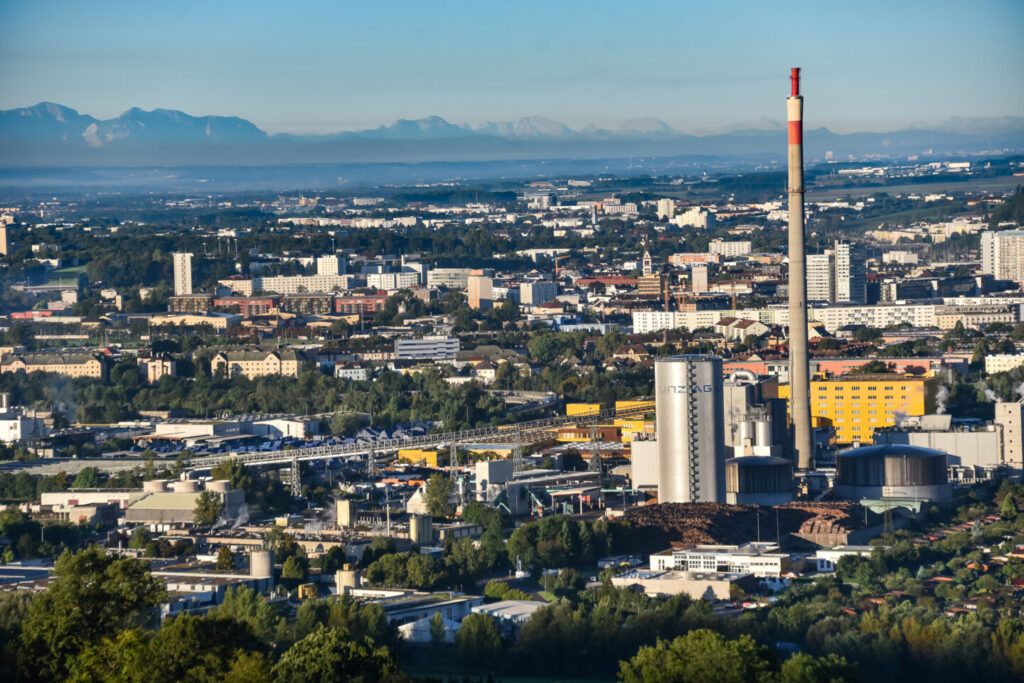
STADT LINZ DWORSCHAK
One city – many city centers
Modern cities need more than just a center. They thrive on a variety of vibrant districts that enable different lifestyles. As a flagship project at the interface between the city center, the Danube region and the harbor district, Tabakfabrik Linz plays a key role in this development. With its focus on the creative and cultural industries, it is a pulsating heart in the middle of Linz, which will finally become a district that combines living, working and enjoyment with the finalization of QUADRILL 2026.
City of media art
Linz has made a name for itself internationally as a UNESCO City of Media Arts – a development that began as early as 1979 with the founding of Ars Electronica , which played at Tabakfabrik Linz on several occasions. The city recognized early on that the combination of art, technology and society is the key to the future. Tabakfabrik is a major contributor to this reputation. It is not only home to the Creative Region as a hub for the creative industries, but also to forward-looking educational institutions such as the “Fashion & Technology” course. This creates the framework conditions for training the creative and digital talents of tomorrow.
Ecosystem for innovation
Linz has a clear vision of becoming the most innovative city in Austria. Tabakfabrik is the place where this vision is lived every day. A unique ecosystem for entrepreneurial spirit and new technologies has been created here. Successful companies and educational opportunities, such as the forward-looking degree programs at the University of Art and Design Linz, attract talent from all over the world. This is how the jobs of tomorrow are created here.
The Tabakfabrik is a mixed-use site owned by the City of Linz that is self-sustaining through its business activities. As an urban hub for cultural and creative industries, contemporary technologies and start-ups, Tabakfabrik sees itself as a place of opportunity that encourages networking and unites an innovative, creative and interdisciplinary community.
Tabakfabrik in figures
0
Purchased
from the city of Linz
0
Organizations
are located here
0
People
work, teach, learn here
What drives us.
The Tabakfabrik is establishing itself as the heart of the vibrant new district based on the four pillars of creativity, social affairs, work and education.
The relevance of the four pillars for the city of Linz becomes clear from a historical perspective. Linz was and still is a city of workers, one of the few cities in Europe with more jobs than inhabitants. Business, trade and industry are flourishing. The resulting high financial strength of the city also made it possible to establish a dense network of social institutions and services.
Furthermore, the expansion of educational and research facilities has also been accelerated in recent years and Linz has been further developed as a business location by developing products with high added value. And finally, over the last four decades, a dense network of high-quality public cultural institutions and a very active independent art and culture scene have been established in the city. The year of the European Capital of Culture visibly marked the transformation into a city of culture. The four pillars complement each other in terms of content and theory and have strong overlaps in terms of implementation.
How we work together.
Tabakfabrik has developed into a center for the creative industries. Over 250 organizations – from start-ups and established companies to socially committed initiatives – have found a home in the historic buildings and the QUADRILL, which will open in 2026. This diversity creates a dynamic atmosphere in which new ideas emerge and collaborations grow.
Our guidelines
Participation
With the purchase of the Tabakfabrik in Linz, the public sector has made an investment in the future. The spiral of speculation has been broken and an entire district has been made usable for society. However, it is not only artists, cultural workers and creative professionals who will be moving into Tabakfabrik. Social workers, businesses and tradespeople, craftspeople and people working in education and science are also moving in. Condensed diversity that develops new forms of human coexistence and cooperation.
A physical and social space, a place of work, inspiration, learning, encounters, opportunities and concrete utopias must now be developed together. The Tabakfabrik must be lived as a social sculpture. The public sector is responsible for all aspects of project development, financing, leasing and redevelopment of the site.
To develop the site, we need people with a broad range of skills and experience who can analyse and discuss aspects of urban development, architecture, organizational structuring, cultural development, etc. from different perspectives and disciplines. A highly motivated team from a wide range of disciplines is needed to design and implement the development process for the site in a structured manner.
However, the development of the new Tabakfabrik did not begin in 2009 with the purchase of the site, but even before that through intensive discussions between a wide range of stakeholders. Prudent development therefore also reflects the existing considerations and discussion results. This applies, for example, to the preliminary study on the cultural use of the Austria Tabak Werke site, which was commissioned by the city in the run-up to the purchase, the recommendation papers of the independent scene and the City Cultural Advisory Board, the old and the new cultural development plan that is currently being drawn up and the Europan competition. In these papers and plans, many ideas have already been formulated, demands articulated and attention drawn to the city’s infrastructural challenges, which Tabakfabrik can help to solve.
Transparency
Getting people excited about Tabakfabrik requires information and transparent communication processes. Transparency creates trust, transparent procedures and decision-making structures counter prejudices and dispel rumors. Transparency also encourages cooperation and personal commitment, both of which are important factors in the development of the site.
Classic PR work includes direct media contacts as well as cooperation with the media, with a particular focus on Tabakfabrik’s four pillars. The homepage serves as a central information point for everyone, while the blog provides insights into daily life. Our social media channels are a low-threshold contact point and direct communication platform.
Openness
Tabakfabrik keeps open spaces open. Thanks to Tabakfabrik’s interdisciplinary orientation and the interweaving of its four pillars, it develops seismographic skills in order to be able to react flexibly to new social developments. Tabakfabrik cannot be fully developed in the conventional sense, as it always needs room for new experiments and no one can predict what our world will look like in 30 years. Behren’s and Popp’s architecture already used this argument when planning Tabakfabrik, deliberately opting for open, large and therefore easily adaptable spaces.
This idea has been transferred from the industrial logic to the new uses since 2009 – now the task is to develop it further. In particular, attention is being paid to shaping the settlement policy in some areas in the interests of a fair society so that financially weaker initiatives are also given a permanent place in the area. This is in line with the idea of openness in socio-political terms.
Load capacity
A solid economic basis is required to guarantee the diverse and high-quality usage options for the site in the long term. The usage and rental structure must be designed as an economically balanced system that takes into account all building- and operation-specific influencing and cost factors. The rental structure is subject to these framework conditions, differentiated according to different quality categories of premises and areas and based on comprehensible criteria. However, these also take into account the cultural and symbolic capital that is contributed by users and benefits Tabakfabrik itself and the other tenants.
Factory of the future – our concept
Tabakfabrik Linz is more than just a place – it is a mirror of Austrian history and a powerful symbol for the future. Its journey from a proud industrial stronghold through privatization to its return to public ownership makes it a unique field of experimentation. Not only are new products being developed here, but the big questions of our society are being rethought and the course set for the Linz of tomorrow.
From symbol to workshop
The history of the Tabakfabrik is closely linked to Austria’s development. Once a prime example of social architecture and a stronghold of workers, it experienced the wave of privatization after the turn of the millennium. The result was its gradual closure. The repurchase by the City of Linz in 2009 marked a turnaround: the return to a strong public design claim. Today, Tabakfabrik is a symbol of this new era and a workshop in which the future of work, society and urban life is actively shaped.
The big questions of our time
How do we want to work and live together in the future? What role does public space play in a modern city? And how do we create sustainable prosperity? Tabakfabrik addresses these big and complex questions. It is not only a place for theoretical debates, but also offers space for concrete experiments. New models for business, culture and democracy are tested here in order to find answers to the challenges of the 21st century.
A look ahead
Tabakfabrik is already thinking about the Linz of 2040 and sees itself as a laboratory in which a future worth living is being developed for the next generation. As a vibrant center for innovation and creativity, it makes a decisive contribution to turning Linz into a “smart city” that is ecologically, economically and socially sustainable. It is a place of hope and energy, where the future is not only imagined, but made.